
What to Look for Before You Trade
The crypto exchange landscape has shifted dramatically. Billions of dollars now flow through centralized platforms every day, and with that volume comes responsibility. Not every platform handles it well. Some prioritize growth over infrastructure. Others cut corners on compliance to move faster.
So the question is no longer “which exchange has the best app?” but rather “which exchange will still have my funds when I need them?” This guide walks you through the criteria that actually matter when evaluating a crypto exchange in 2026. No rankings, no recommendations. Just the framework you need to decide for yourself.
- What to Look for Before You Trade
- Security Is Not a Feature. It Is the Foundation.
- Proof of Reserves: Trust, but Verify
- Fee Structures: The Cost You Control
- Regulation and Licensing: The Rules Changed in 2025
- Liquidity: Why It Affects Your Wallet
- User Experience and Platform Reliability
- Self-Custody vs. Exchange Custody: Know the Trade-Off
- The Checklist: Before You Deposit a Single Dollar
- What the Data Tells Us
Security Is Not a Feature. It Is the Foundation.
Every exchange claims to be secure. But claims and architecture are two different things. The platforms that protect user funds most effectively share a few common traits: the majority of assets are held in cold wallets, large withdrawals require multi-signature authorization, and the infrastructure is regularly audited by independent cybersecurity firms.
When evaluating security, ask specific questions. What percentage of assets does the platform keep offline? How does it handle private key management? Has it undergone a third-party security audit in the past 12 months? Is there an active bug bounty program that incentivizes white-hat researchers to find vulnerabilities before attackers do?
Also look at how a platform has responded to incidents in the past. Some platforms have covered user losses within hours and restructured their entire key management system. Others went silent. That difference tells you more about a platform’s values than any security page on their website.
Proof of Reserves: Trust, but Verify
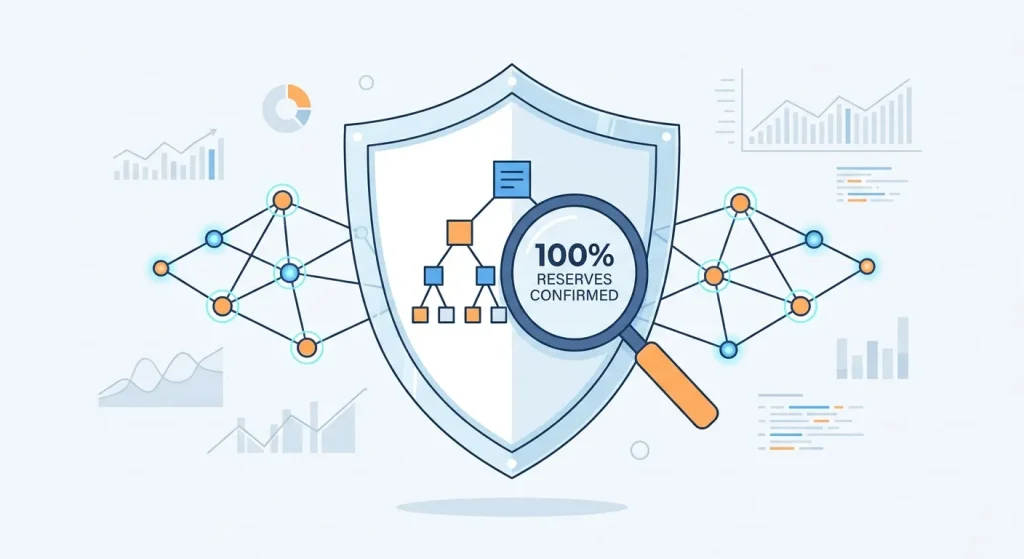
Proof of Reserves (PoR) became an industry standard after high-profile collapses revealed that some platforms had been secretly misusing customer deposits. The concept is straightforward: an exchange proves, through cryptographic audits, that it holds enough assets to cover every user balance.
Most PoR systems use a Merkle tree structure, which lets individual users verify their balance is included in the total without exposing other accounts. Some platforms now publish real-time dashboards that update continuously, while others release periodic snapshots through third-party auditors.
But PoR has limitations. A snapshot only shows assets at a single moment. It does not reveal liabilities, debts, or whether assets were temporarily borrowed to pass an audit. The newer standard, sometimes called Proof of Solvency, attempts to address this by verifying both reserves and liabilities. Look for platforms that go beyond basic PoR and include liability verification in their audits.
| Criteria | What It Means | Red Flag |
|---|---|---|
| Merkle Tree Verification | You can verify your own balance is included | No individual verification option |
| Third-Party Auditor | Independent firm confirms the data | Self-reported, no auditor named |
| Liability Disclosure | Platform reveals debts alongside assets | Only assets shown, no liabilities |
| Frequency | How often audits are published | Single audit with no follow-up |
| Asset Coverage | Which tokens are included in the audit | Only BTC/ETH, ignoring altcoin balances |
Fee Structures: The Cost You Control
Fees are the one variable you can manage before you even place a trade. The industry standard model is the maker-taker system. Makers add liquidity to the order book by placing limit orders that do not execute immediately. Takers remove liquidity with market orders that fill instantly. Because exchanges need liquidity to function, makers almost always pay less.
In 2026, typical maker fees on reputable platforms range from 0.00% to 0.10%, while taker fees range from 0.01% to 0.40%. The gap between the cheapest and most expensive platforms is significant. For a trader executing $100,000 in monthly volume, a difference of 0.30% in taker fees translates to $300 per month in extra costs.
But the headline fee is not the whole picture. Watch for withdrawal fees (which vary by network), spread costs (hidden markups between buy and sell prices), and deposit fees for fiat on-ramps. Some platforms advertise zero trading fees but compensate with wider spreads. If the spread is not transparently displayed, treat it as a warning sign.
| Fee Type | What It Is | How to Minimize It |
|---|---|---|
| Maker Fee | Charged when you add liquidity (limit orders) | Use limit orders with Post-Only enabled |
| Taker Fee | Charged when you remove liquidity (market orders) | Avoid market orders when speed is not critical |
| Withdrawal Fee | Cost to move crypto off the platform | Choose low-cost networks (e.g., Arbitrum, Solana) |
| Spread | Hidden gap between buy and sell price | Compare bid/ask prices before executing |
| Fiat Deposit Fee | Cost to deposit local currency | Use bank transfers instead of card payments |
Regulation and Licensing: The Rules Changed in 2025
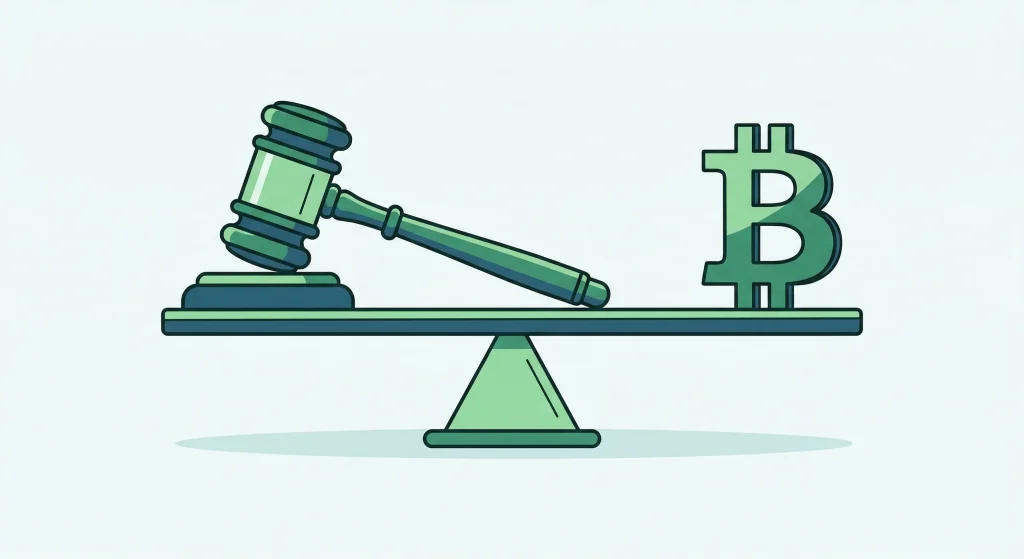
The regulatory landscape for crypto exchanges looks nothing like it did two years ago. In the European Union, the Markets in Crypto-Assets Regulation (MiCA) is now fully in effect, with a final compliance deadline of July 1, 2026 for all crypto-asset service providers. MiCA requires exchanges to obtain authorization, meet capital requirements, segregate client assets, and implement robust governance frameworks.
The impact has been measurable. Over 90% of crypto exchanges operating in the EU have updated their KYC and AML processes to meet MiCA standards. Non-compliant platforms saw a 40% decline in EU-based users. Meanwhile, crypto-related scam reports dropped by 58% in regulated jurisdictions, according to industry data.
In the United States, the GENIUS Act, signed into law in July 2025, introduced clear stablecoin regulations requiring 1:1 backing. The Treasury and IRS have also expanded reporting rules for digital-asset brokers. Globally, the OECD’s Crypto-Asset Reporting Framework (CARF) is set to enable cross-border tax information exchange starting in 2027.
For users, this means one thing: prioritize platforms that hold licenses in your jurisdiction. A licensed exchange is not immune to failure, but it operates under oversight that significantly reduces the risk of fund mismanagement.
Liquidity: Why It Affects Your Wallet
Liquidity refers to how easily you can buy or sell an asset without significantly moving its price. On a high-liquidity platform, a $50,000 BTC sell order fills at or near the current market price. On a low-liquidity platform, the same order might cause slippage of 0.5% or more, costing you an extra $250.
Liquidity depends on trading volume and order book depth. Higher-volume platforms attract more market makers, which tightens spreads and reduces slippage. When evaluating an exchange, check the 24-hour trading volume for the specific pairs you plan to trade. A platform with high overall volume but thin liquidity on your preferred altcoin pair is not necessarily a good fit.
User Experience and Platform Reliability
A clean interface is nice. But what actually matters is whether the platform works when you need it most. During sharp market moves, some exchanges have historically experienced outages, delayed order execution, or frozen withdrawals. For leveraged traders, even a few minutes of downtime can mean liquidation.
Look for platforms that publish uptime statistics and have a documented track record during high-volatility events. Mobile app quality, API stability for algorithmic traders, and the availability of advanced order types (stop-loss, trailing stop, OCO) are also practical differentiators.
Customer support is often overlooked until something goes wrong. Test it before you need it. Send a question through live chat or email and measure the response time. Platforms that take days to respond during normal operations will not improve during a crisis.
Self-Custody vs. Exchange Custody: Know the Trade-Off
No matter how secure an exchange is, keeping all your assets on a centralized platform means trusting a third party with your private keys. The industry phrase “not your keys, not your coins” exists for a reason.
For assets you are actively trading, exchange custody makes sense. For long-term holdings, a hardware wallet (such as devices from Ledger, Trezor, or Keystone) offers significantly stronger protection. Hardware wallets store private keys offline, making them immune to the remote exploits that have caused billions in losses across the industry.
A balanced approach: keep your trading capital on the exchange, and move everything else to a cold wallet. Enable withdrawal address whitelisting on your exchange account so that funds can only be sent to pre-approved addresses. This adds a layer of protection even if your account credentials are compromised.
The Checklist: Before You Deposit a Single Dollar
| Category | Key Question | Where to Find It |
|---|---|---|
| Security | Does it use cold wallet storage and multi-sig? | Platform security page, third-party audits |
| Proof of Reserves | Can you verify your balance in the Merkle tree? | PoR dashboard or audit reports |
| Fees | What are the real maker/taker fees after spreads? | Fee schedule page, test with small trade |
| Regulation | Is it licensed in your jurisdiction? | Regulatory page, national registry |
| Liquidity | Is there depth on the pairs you trade? | Order book, 24h volume data |
| Uptime | Has it stayed online during volatility? | Status page, community reports |
| Support | How fast does it respond to tickets? | Test it before depositing |
| Custody Option | Does it support easy withdrawal to cold wallets? | Withdrawal settings, whitelist feature |
What the Data Tells Us
The crypto exchange market in 2026 is more regulated, more transparent, and more competitive than at any point in its history. Proof of Reserves is becoming a baseline expectation. MiCA and CARF are pushing global compliance standards forward. Fee structures are compressing as platforms compete for volume.
But the fundamentals have not changed. The platforms that earn trust are the ones that treat security as architecture, not marketing. The ones that publish their reserves without being asked. The ones that stay online when the market is crashing and everyone is trying to exit at once.
Your job as a user is straightforward: verify everything, trust nothing by default, and never keep more on an exchange than you can afford to lose. The tools to evaluate platforms are better than ever. Use them.