



Seven Years in Plain Sight
On April 5, 2026, MetaMask developer and security researcher Taylor Monahan stated publicly that North Korean IT workers had been embedded in DeFi projects since at least DeFi Summer in 2020 — roughly seven years of continuous infiltration across the crypto industry. Her estimate: more than 40 DeFi platforms, including well-known names, have at some point employed DPRK state-linked developers.
The detail that makes this particularly difficult to dismiss: the “seven years of blockchain development experience” these workers list on their resumes, as Monahan noted, is not a lie. These are real developers with verifiable skills, genuine output, and professional histories that reflect actual work done on real protocols. The expertise was acquired through years of employment inside the industry they were simultaneously tasked with compromising.
Monahan’s remarks came hours after Drift Protocol published its post-mortem on the $285 million exploit of April 1, 2026 — the largest DeFi hack of 2026 and the second-largest in Solana’s history. Drift attributed the attack with medium-high confidence to UNC4736, a North Korean state-affiliated threat actor also tracked as AppleJeus or Citrine Sleet, operating under the Reconnaissance General Bureau.
Table 1 — Lazarus Group and DPRK-Linked Major Crypto Exploits
| Year | Target | Amount | Method |
|---|---|---|---|
| 2022 | Ronin Bridge | $625 million | Compromised validator keys via social engineering |
| 2024 | WazirX | $235 million | Multisig compromise |
| 2024 | Radiant Capital | $50 million | Malware via Telegram, same UNC4736 group |
| 2025 | Bybit | $1.5 billion | Social engineering, supply chain compromise |
| 2026 | Drift Protocol | $285 million | 6-month infiltration, durable nonce attack, fake collateral |
Drift Protocol Lost $285M and It Had Nothing to Do With the Code
The Drift Operation: Six Months, Not Six Minutes
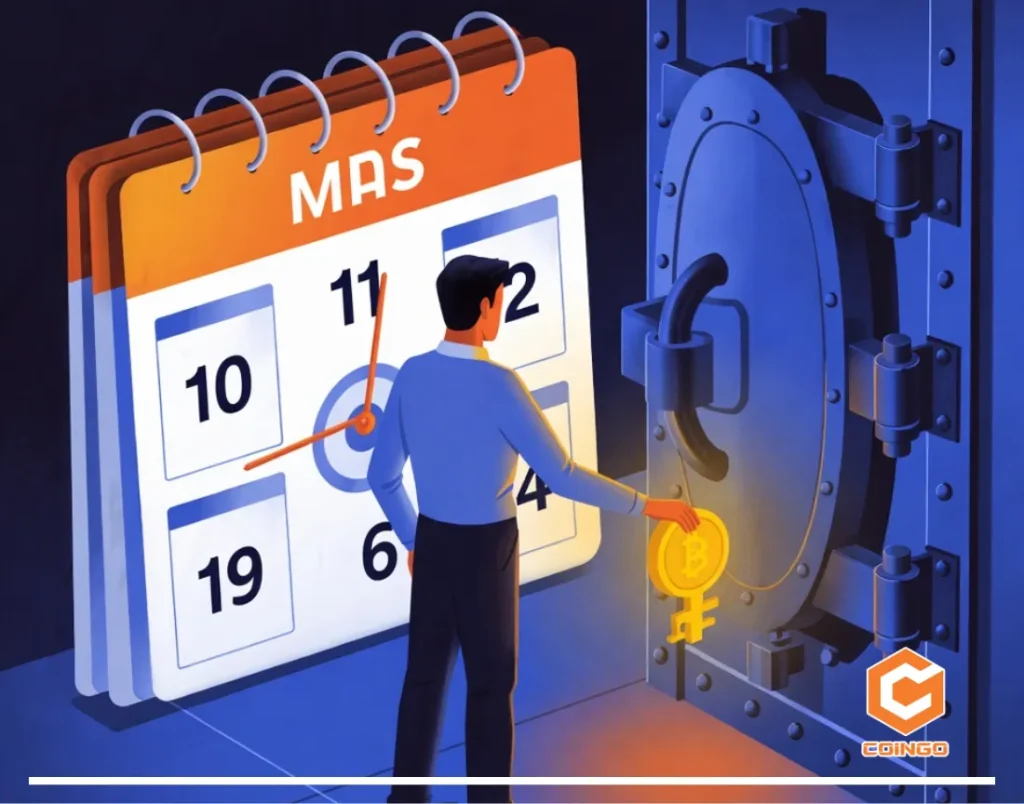
The Drift exploit is notable not because of its technical mechanism, but because of its patience. The attack did not begin on April 1. According to Drift’s incident update, the operation traces back to Fall 2025, when contributors were approached at a major crypto conference by individuals presenting themselves as representatives of a quantitative trading firm interested in protocol integration.
What followed was a methodical campaign. The group communicated through a Telegram channel, engaged in extended conversations about trading strategies and protocol architecture, and met Drift contributors in person at multiple major industry conferences across several countries through February and March 2026. Between December 2025 and January 2026, they onboarded an Ecosystem Vault on Drift, deposited over $1 million in real capital, and built a functioning operational presence inside the ecosystem. None of this flagged as anomalous.
The technical execution began on March 11, 2026, with a Tornado Cash withdrawal of 10 ETH — timed at approximately 9:00 AM Pyongyang time, a timestamp consistent with DPRK operational patterns. The funds deployed the CarbonVote Token (CVT), a fictitious asset manufactured with a few thousand dollars in seeded liquidity and wash trading. Drift’s oracles were manipulated into treating CVT as legitimate collateral worth hundreds of millions of dollars.
On March 23, durable nonce accounts were set up, with at least two of five multisig signers unknowingly pre-approving delayed transactions. On March 27, Drift migrated its Security Council — and the attackers regained access to two of five signers in the updated multisig configuration. On April 1, the exploit executed in under 12 minutes, draining $285 million from multiple vaults. TVL collapsed from $550 million to under $250 million. The DRIFT token fell 37% to 42% within hours.
“This was a highly sophisticated operation that appears to have involved multi-week preparation and staged execution, including the use of durable nonce accounts to pre-sign transactions that delayed execution.” — Drift Protocol, incident update, April 5, 2026
What Is DeFi? Decentralized Finance Explained
The Intermediary Problem
A critical detail in Drift’s post-mortem challenges the assumption that DPRK attribution means North Korean nationals were in the room. The individuals who appeared in person at conferences were not North Korean. Drift was explicit: DPRK threat actors at this level deploy third-party intermediaries carrying fully constructed identities — complete employment histories, public-facing credentials, and professional networks built to withstand standard due diligence.
Tim Ahhl, founder of the Titan Exchange on Solana, described encountering this pattern firsthand in a previous role. His team interviewed a candidate who was technically excellent, conducted video calls without issue, but declined an in-person meeting. They later found his name in a Lazarus operative information dump. The sophistication of the fake persona had been sufficient to pass the screening process up to that point.
Ahhl’s observation after Drift’s disclosure: the operation had evolved. “Years later, and it seems Lazarus now has non-North Koreans working for them to con people in person.” This represents a meaningful escalation. The earlier pattern relied on video-call-only candidates who avoided in-person verification. The Drift operation included face-to-face conference meetings in multiple countries — a layer of operational authenticity that eliminates one of the few reliable detection signals.
On-chain fund flows connect this operation to the October 2024 Radiant Capital hack, also attributed to UNC4736. That attack began with a Telegram message impersonating a former contractor, delivered malware through a ZIP file, and stole $50 million. The scale between the two operations — $50 million to $285 million in roughly 18 months — reflects the group’s escalating ambition and refining methodology.
Two Threat Levels, Not One
Blockchain investigator ZachXBT drew an important distinction that the industry tends to collapse: not all DPRK threats are equally sophisticated. The Lazarus Group is the collective label for all North Korean state-sponsored cyber actors, but the complexity of operations varies significantly across the group.
“The main issue is that everyone groups them all together when the complexity of threats is different. Threats via job postings, LinkedIn, email, Zoom, or interviews are basic and in no way sophisticated — the only thing about it is they’re relentless. If you or your team still falls for them in 2026, you’re very likely negligent.” — ZachXBT, blockchain investigator
The lower-complexity layer — IT worker infiltration through job applications, LinkedIn outreach, and Zoom-based interviews — is persistent rather than technically advanced. These workers enter projects through standard hiring channels, build blockchain development experience over years, generate income for the DPRK state, and in some cases may facilitate later, more targeted attacks through their insider access.
The higher-complexity layer — multi-month social engineering campaigns like the Drift operation — requires organizational backing, real capital deployment, conference attendance, and coordination across multiple non-North Korean intermediaries. These are intelligence operations, not opportunistic hacks. The $7 billion the Lazarus Group has stolen since 2017, according to R3ACH analysts, has funded North Korea’s weapons program — a fact the U.S. government has confirmed directly.
What the Industry Is Being Asked to Confront
The practical implications cut across how DeFi projects hire, govern, and secure their infrastructure. TRM Labs identified three immediate lessons from the Drift exploit. Timelocks on governance and admin actions are a critical safeguard — their removal on March 27 eliminated the detection window that could have prevented the attack. Oracle design requires defense-in-depth: minimum liquidity thresholds, time-weighted price validation, and circuit breakers before any asset is accepted as collateral. And multisig hygiene matters — signers must independently verify the full content of any transaction before signing, rather than relying on social trust in counterparties.
But the structural challenge Drift’s incident update raises goes deeper than any specific technical fix. If a well-resourced state actor is willing to spend six months and $1 million building a legitimate presence inside an ecosystem before executing an attack, the standard security model of DeFi — pseudonymous contributors, multisig governance, open-source code — contains no inherent defense against that level of patience and investment.
The OFAC sanctions search tool remains one of the few public resources for screening counterparties against updated lists of known DPRK-linked individuals. The broader question of how to reconcile DeFi’s open, permissionless ethos with the reality of state-sponsored adversaries operating inside the ecosystem for years without detection has no clean answer — but the Drift operation has made it harder to defer.