
Where the Market Stands Right Now
As of early April 2026, Bitcoin dominance sits at approximately 56% to 58% — its highest reading since April 2021. The Altcoin Season Index, which measures whether the top 100 altcoins are outperforming Bitcoin on a rolling 90-day basis, has been trading in the 16 to 37 range for most of 2026. A reading above 75 is required to confirm an altcoin season. The index hit a record low of 18 in late December 2025.
The numbers behind those headline figures are worse. According to Capriole Investments’ Altcoin Speculation Index, only 21% of top altcoins outperformed Bitcoin during the most recent three-month period. Broader market breadth data shows that only 11% of all altcoins are currently trading above their 50-day moving averages — a reading associated with extreme weakness. TOTAL2, the total market cap of all crypto excluding Bitcoin, fell 32% from its October 2025 all-time high of $1.77 trillion to approximately $1.19 to $1.21 trillion, breaking below its 50-week moving average.
Bitcoin itself peaked at $126,000 in 2025 and has since corrected roughly 44% to the $66,000 to $70,000 range as of April 2026. The Crypto Fear and Greed Index has hovered between 20 and 30 for most of this period, sitting firmly in Extreme Fear territory.
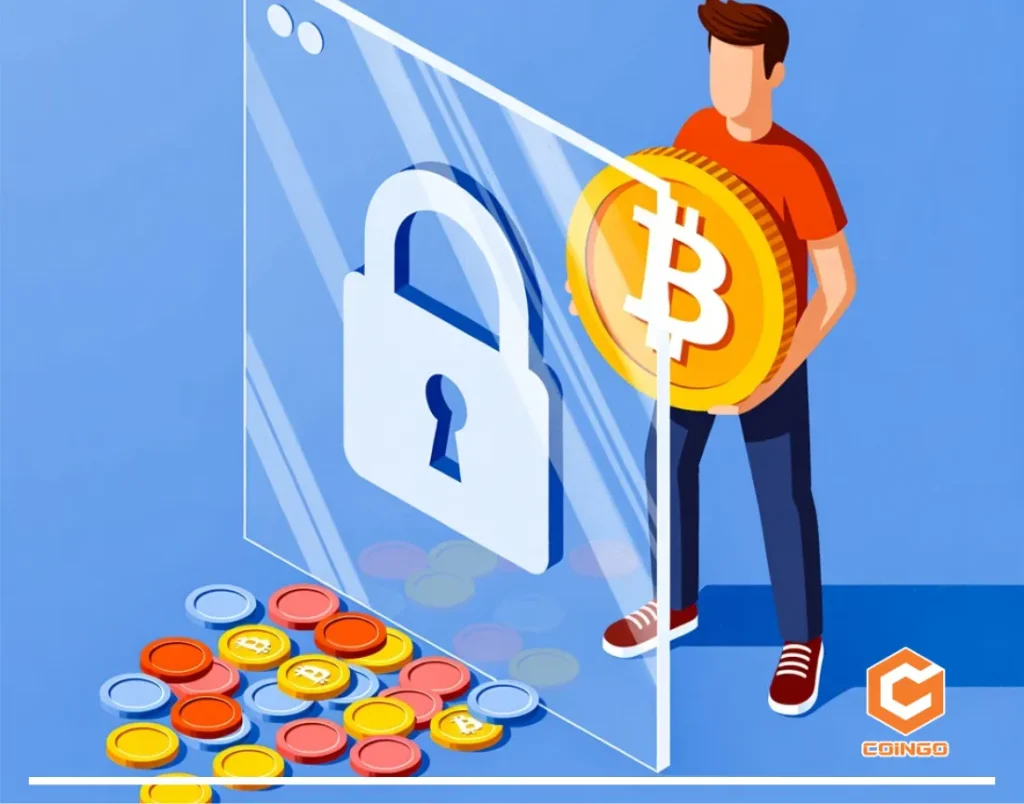
Table 1 — Altcoin Season Key Indicators (April 2026 vs. Previous Cycles)
| Metric | 2020–2021 Altseason | April 2026 Reading |
|---|---|---|
| Altcoin Season Index | 75+ (confirmed) | 16–37 (Bitcoin Season) |
| BTC Dominance | Fell from 70% to 38% | ~56–58% (rising) |
| Altcoins above 50-day MA | 60–80%+ | ~11% |
| TOTAL2 trend | Strong uptrend | Down 32% from ATH |
| Fear and Greed Index | Greed / Extreme Greed | 20–30 (Extreme Fear) |
What Are Altcoins? Everything Beyond Bitcoin
Why the Old Playbook No Longer Works
In the 2016 to 2017 and 2020 to 2021 cycles, capital rotation followed a predictable sequence: Bitcoin rallied first, pulled in new liquidity, printed a new all-time high, then profit-takers rotated into Ethereum and eventually into mid-cap and small-cap altcoins. Bitcoin dominance collapsed — from 86% to 38% in 2017, from 70% to 38% in 2021 — and hundreds of tokens posted 10x to 50x gains as that liquidity flooded the broader market.
That sequence assumed a specific type of buyer: retail traders with free-moving capital who would chase returns across the risk spectrum. The buyer base has changed fundamentally in this cycle.
The approval and commercial success of spot Bitcoin ETFs introduced a structurally different demand source. BlackRock’s IBIT ETF alone attracted over $25 billion in inflows in 2025. This capital enters through regulated products that offer only Bitcoin exposure. It does not naturally rotate into altcoins. Institutional investors rebalance within defined allocations rather than chasing speculative rotation. When ETF-driven buyers take profits from Bitcoin, those funds return to traditional portfolios — not into SOL, AVAX, or smaller tokens.
Analyst CyrilXBT summarized the structural shift directly: Bitcoin dominance has been printing higher lows since 2022, the threshold below 50% that historically triggered altseason ignition has not been breached since September 2023, and capital leaving Bitcoin is rotating into stablecoins or staying within ETF structures rather than moving into altcoins.
“I don’t see much hope for most altcoins. That doesn’t mean that select altcoins won’t do exceptionally well and outperform Bitcoin — I think they will. But I don’t think you’re in a world anymore where you can just throw a dart at a chart of altcoins and assume that your thing is going to go 10 or 50 or 100x.” — Scott Melker, crypto analyst, April 2026
The ETF Walled Garden Problem
The mechanism by which Bitcoin ETFs trap capital is worth understanding in detail. When traditional finance allocates to crypto, it does so through regulated instruments with defined parameters. A pension fund or wealth manager buying IBIT gets Bitcoin exposure and nothing else. There is no natural pathway from that product to a mid-cap DeFi token or a Layer 2 project.
Previous altseasons relied on a capital cascade: retail buyers entering through centralized platforms would, after seeing Bitcoin gains, diversify into Ethereum and eventually into smaller tokens. That cascade still happens at the retail level, but the marginal buyer of this cycle is disproportionately institutional and ETF-constrained. As MEXC analysts described it, this is the “ETF walled garden” problem — liquidity that enters the market through regulated Bitcoin products cannot flow freely through the broader crypto ecosystem.
Crypto analyst Matthew Hyland framed the historical dynamics bluntly. After altcoin dominance hits a major cycle low, historical data shows it typically takes an extended period to recover. His view: there will be no traditional altcoin season in 2026 for structural, not sentiment-driven, reasons.
What Would Need to Change
Analysts broadly agree on the preconditions for a genuine altcoin season. The list is specific, and none of the items are currently in place.
Bitcoin dominance breaking below 52% to 54% is consistently cited as the threshold required for broad capital rotation. Currently at 56% to 58% and printing higher lows, this condition is not close to being met.
Bitcoin reclaiming $100,000 or above is typically required before profit-takers begin rotating into higher-beta assets in meaningful size. BTC is currently 44% below its $126,000 all-time high.
Macro liquidity expansion — specifically Fed rate cuts — would expand the marginal dollar available for speculative assets. The Fed is expected to hold rates through mid-2026 with one or two cuts priced for the second half of the year. If those cuts arrive, altcoins are among the highest-beta beneficiaries of easier monetary conditions.
New altcoin-specific narratives with real capital destination. DeFi Summer in 2020 worked because yield farming gave capital a specific reason to own DeFi tokens. The 2021 altseason accelerated because NFTs and Layer 1 competition created demand beyond Bitcoin. AI tokens, RWA projects, and DePIN infrastructure are the leading narrative candidates in 2026, but none have yet generated the kind of broad retail participation that characterized previous seasons.
“Bitcoin dominance is printing a higher low, and money is rotating back into BTC, not alts.” — CyrilXBT, analyst
The Selective Phase: Who Can Still Win
The current market structure does not mean no altcoins will perform well. It means the distribution of returns will be far more concentrated than in previous cycles. Analysts who acknowledge no broad altseason is coming still point to specific categories where meaningful gains remain possible.
Tokens with institutional-grade liquidity and regulatory clarity — primarily Ethereum and Solana — are most likely to benefit from any ETF-driven expansion, as Ethereum ETFs and Solana ETF applications are either live or in progress. These assets sit closest to the institutional capital pool.
Projects in structural growth narratives — real-world asset tokenization, AI infrastructure, and DePIN networks — have shown they can attract genuine demand independent of broad market rotation, as evidenced by ALGO’s response to the Google quantum paper, Render’s sustained DePIN momentum, and the RWA sector’s growth to over $26 billion in on-chain assets.
For most of the remaining altcoin market, the picture is more challenging. Social mentions of the term “altseason” have dropped to a two-year low according to Santiment data, suggesting that the expectation of a rising-tide-lifts-all-boats rally has faded significantly in the trading community. As one X analyst put it: “There will NEVER be another Rising Tides rally where everything pumps. Ever.”
That is a strong statement, and the future is genuinely uncertain. What the data in April 2026 supports is this: the conditions that historically produced broad altcoin seasons are not present, the structural changes in who is buying crypto are not temporary, and the selection of which altcoins to hold matters more now than at any previous point in the market’s history.