
One Headline Changed the Tape
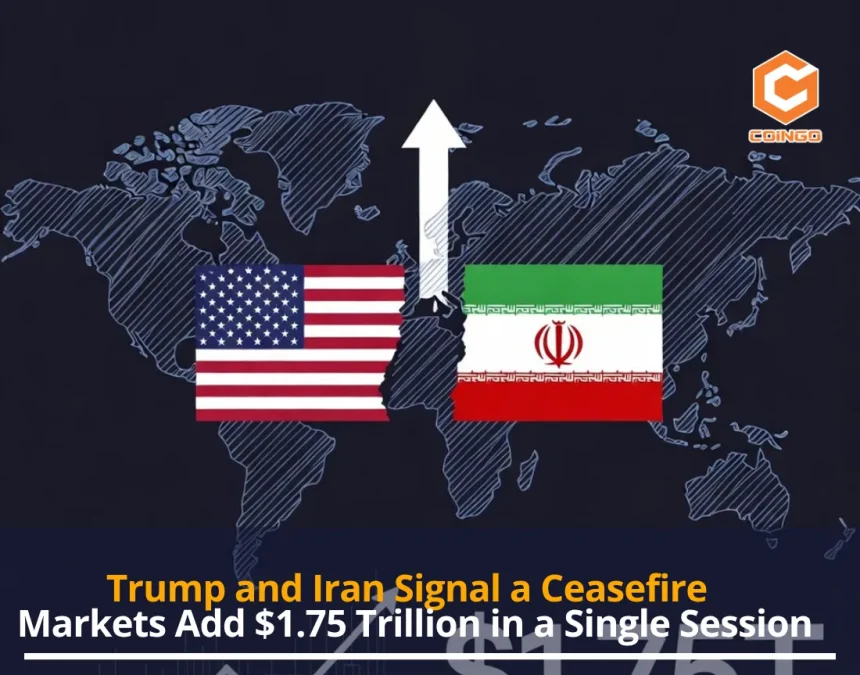
Markets spent most of Q1 2026 trading geopolitics. On March 31, a single headline did more work than weeks of earnings data. Reports emerged that President Trump was willing to end U.S. military operations in Iran even if the Strait of Hormuz remains partially closed. Hours later, Iran indicated it was open to negotiations under specific conditions. Both signals landed at the same time, and traders responded immediately.
The S&P 500 closed up approximately 2.4% near 6,496. The Nasdaq Composite gained 3.3% to around 21,475, briefly touching near +4% intraday. The Dow Jones Industrial Average added 2.1% to close near 46,176. About 77% of stocks advanced on the session. Roughly $1.75 trillion was injected back into Wall Street’s market cap in a single day.
- One Headline Changed the Tape
- Q1 Was the Worst Quarter for Equities Since 2022
- Bitcoin and Ethereum Followed Equities Higher
- Gold Consolidated, Silver Moved More Decisively
- March 31 Performance Across Asset Classes
- The Bond Market and the Fed’s Balancing Act
- The Strait of Hormuz Is What Traders Are Actually Watching
The reversal came after a rough March 30, when the S&P 500 slipped 0.4% and the Nasdaq dropped 0.7% as oil climbed and semiconductor stocks came under pressure.
Q1 Was the Worst Quarter for Equities Since 2022
Tuesday’s session recovered some ground, but it didn’t erase the quarter. The S&P 500 ended Q1 down roughly 7% — its weakest quarterly performance since 2022. The Iran conflict defined the period from start to finish. Oil-driven inflation fears, a tech pullback, and the Magnificent Seven sliding into correction territory all contributed.
WTI crude settled Tuesday around $101–$102 per barrel after trading between $99 and $106 intraday. Brent hovered near $104–$106, off recent peaks above $110. The monthly oil gain in March was the largest in recent memory, and U.S. gasoline prices crossed $4 per gallon for the first time in this cycle.
Bitcoin and Ethereum Followed Equities Higher
Bitcoin rose about 1.9% to approximately $67,798, tapping $68,500 intraday. Ethereum gained roughly 3.9% to around $2,096. Both assets tracked equity markets closely, rising as risk appetite returned. The crypto fear and greed index remained in extreme fear territory but showed modest improvement on the day.
The pattern is consistent with what markets have shown throughout Q1: crypto trades as a risk asset, moving in sync with equities when macro sentiment shifts. Neither bitcoin nor ethereum moved ahead of the equity rally — they followed it.
Gold Consolidated, Silver Moved More Decisively
Gold traded between $4,500 and $4,681 per ounce, consolidating after a run to record highs earlier in the quarter. Safe-haven buying had lifted the metal through most of March. De-escalation hopes trimmed some of that demand on Tuesday, though prices stayed well elevated relative to pre-conflict levels.
Silver moved more decisively, posting gains of 3–7% in spot and futures markets to reach approximately $73–$75 per ounce. The combination of safe-haven positioning and industrial demand continued to support silver even as gold pulled back slightly on the ceasefire signal.
March 31 Performance Across Asset Classes
Key closing levels and moves across equities, crypto, commodities, and bonds on March 31, 2026:
| Asset | Daily Move | Level (Close) | Note |
|---|---|---|---|
| S&P 500 | +2.4% | ~6,496 | Worst Q1 since 2022 (–7% qtr) |
| Nasdaq Composite | +3.3% | ~21,475 | Intraday peak +4% |
| Dow Jones (DJIA) | +2.1% | ~46,176 | 77% of stocks advanced |
| Bitcoin (BTC) | +1.9% | ~$67,798 | Tapped $68,500 intraday |
| Ethereum (ETH) | +3.9% | ~$2,096 | Tracked equity risk-on move |
| Gold | Consolidated | $4,500–$4,681 | Off recent record highs |
| Silver | +3–7% | ~$73–$75 | Safe-haven + industrial demand |
| WTI Crude Oil | ~$101–$102 | Intraday: $99–$106 | Largest monthly gain in recent memory |
| 10-Year UST Yield | –3 to –5 bps | ~4.30–4.31% | Powell: inflation expectations “in check” |
| Sources: TradingView, CoinDesk, bitcoincom — March 31, 2026 | |||
The Bond Market and the Fed’s Balancing Act
U.S. Treasury yields eased slightly on Tuesday. The 10-year yield fell to around 4.30–4.31%, down roughly three to five basis points on the session. Federal Reserve Chair Jerome Powell noted that long-term inflation expectations remain
“in check” despite ongoing Middle East uncertainty.
That statement gave rate-hike fears some room to settle, but it doesn’t resolve the underlying tension. Sustained high oil prices could push inflation higher and force the Fed’s hand. At the same time, rising defense spending and war-related deficits introduce fiscal concerns that could push yields back up regardless of Fed posture. Both forces are still active.
The Strait of Hormuz Is What Traders Are Actually Watching
The Strait of Hormuz handles roughly 20% of global oil supply. Any disruption to tanker traffic there moves prices quickly and broadly — and that chokepoint, not the battle lines, is what markets are pricing in or out with each headline.
Corporate earnings gave traders a secondary reason to stay in on Tuesday. Double-digit profit growth has held up across recent quarters, and AI-related themes continued to attract institutional attention even as growth stocks pulled back through Q1.
Analysts expect volatility to carry into Q2. Markets remain sensitive to ceasefire progress, oil’s next move, and any shift in Fed language around inflation. A quick resolution to the Iran conflict could support a recovery in tech and growth stocks. A prolonged one keeps inflation risk on the table and financial conditions tighter than most models account for. Tuesday showed that markets want to believe the worst is behind them. The data will determine whether they’re right.