
What Atkins Said and Where the Proposal Stands
On April 6, 2026, SEC Chairman Paul Atkins told attendees at the inaugural Digital Assets and Emerging Technology Policy Summit — hosted by Vanderbilt University and the Blockchain Association at Vanderbilt’s Owen Graduate School of Management — that the agency’s crypto rulemaking proposal had cleared its internal vote and was now sitting with the White House for final administrative review.
“We’ll have reg crypto that we’ll be proposing here shortly. It’s in fact at OIRA right now, which is the next step before being published, so that’s exciting.” — Paul Atkins, SEC Chairman, April 6, 2026
OIRA — the Office of Information and Regulatory Affairs — is a division of the White House Office of Management and Budget that reviews all economically significant federal regulations before publication. Under the standard federal rulemaking process, the SEC first votes to approve a formal proposal internally, then submits it to OIRA for review. OIRA typically takes 30 to 90 days to complete its review, during which it may assess cost-benefit analysis, economic impact, consistency with existing federal policy, and interagency coordination. After OIRA clearance, the proposal is published in the Federal Register and opened to public comment.
- What Atkins Said and Where the Proposal Stands
- The Core Reclassification: Most Crypto Is Not a Security
- The Startup Exemption: A Four-Year On-Ramp
- The Fundraising Exemption: $75 Million With Structured Disclosure
- The Investment Contract Safe Harbor: A Path Out of Securities Law
- The DeFi Innovation Exemption and SEC-CFTC Coordination
- What Atkins Said About Gensler’s Legacy
Atkins first outlined the framework on March 17, 2026, in a speech at the DC Blockchain Summit titled “Regulation Crypto Assets: A Token Safe Harbor.” That speech, now published on the SEC’s official website, represents the most authoritative public statement of the proposal’s contents — the formal rule text has not yet been released.
The Reg Crypto proposal is the centerpiece of a broader agenda that Atkins has spent twelve months building at the SEC, dismantling the enforcement-first posture of the previous administration and replacing it with a framework that puts rulemaking ahead of subpoenas. Whether that framework survives the next election cycle is a separate question. The structural change inside the agency is already done.
The Core Reclassification: Most Crypto Is Not a Security
The conceptual foundation of Reg Crypto is a new interpretive approach to which digital assets fall under federal securities law. Under the proposed framework, most crypto assets would be classified as non-securities by default. The four categories explicitly identified as outside securities law — established jointly by the SEC and CFTC in an interpretive release on March 17, 2026, replacing the SEC’s 2019 FinHub framework — are:
Digital commodities — assets with commodity-like characteristics where value is not derived from managerial efforts.
Digital collectibles — NFT-style assets with utility or cultural value.
Digital tools — tokens granting access to services or software functionality.
Payment stablecoins — dollar-pegged instruments used for settlement.
Only tokenized traditional securities — blockchain representations of existing financial instruments such as stocks or bonds — would remain fully subject to existing securities laws. The guidance also clarified that secondary market trades do not automatically carry over the securities status that may apply during initial issuance, a distinction that has significant implications for exchanges and trading platforms.
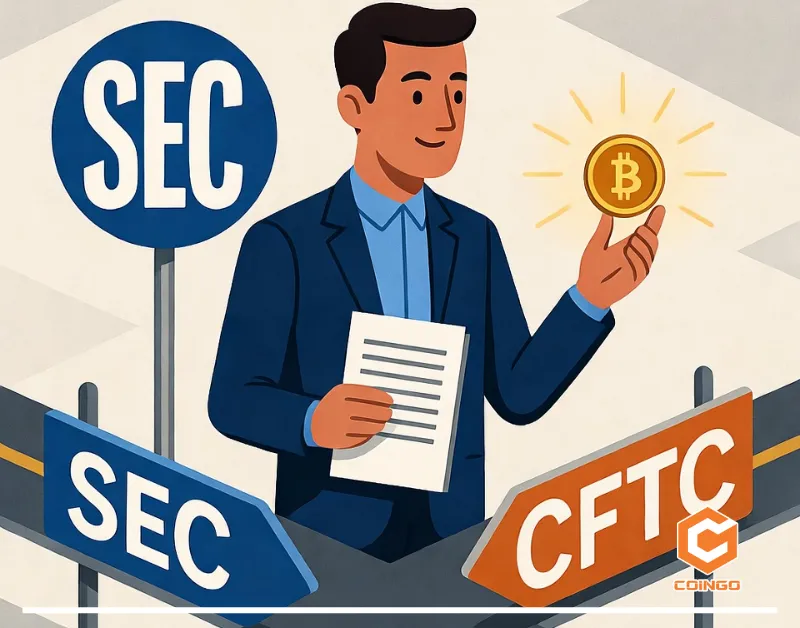
Table 1 — Reg Crypto: The Three Safe-Harbor Pathways
| Safe Harbor | Who It Covers | Key Terms |
|---|---|---|
| Startup Exemption | Early-stage crypto projects | Raise up to ~$5M over 4 years; principles-based public disclosures; file notice with SEC; non-exclusive |
| Fundraising Exemption | Crypto asset investment contract issuers | Raise up to ~$75M per 12-month period; disclosure doc covering financial condition; can still use other registration exemptions |
| Investment Contract Safe Harbor | Mature networks exiting securities classification | Asset exits securities law once issuer permanently ceases all essential managerial efforts promised to investors |
The Startup Exemption: A Four-Year On-Ramp
The startup exemption is designed for early-stage blockchain projects that need to raise capital before a network has matured or decentralized sufficiently to operate independently. Under the proposed terms, qualifying projects would receive a time-limited, non-exclusive registration exemption lasting up to four years.
During this window, projects could raise up to approximately $5 million while the network develops. In return, issuers must post principles-based disclosures publicly — covering project plans, use of funds, team composition, and risk factors — and file notices with the SEC. The exemption is non-exclusive, meaning projects can also pursue other existing registration pathways simultaneously.
The four-year timeframe is deliberately structured to align with the development arc of decentralization. The SEC’s reasoning is that a project in its early stages is inherently more dependent on the founding team’s managerial efforts — the factor that most clearly triggers Howey test securities classification — and therefore deserves a transitional period before being held to full registration requirements. As the network matures and management’s role diminishes, the project would ideally migrate toward the investment contract safe harbor.
The proposal corresponds directly to a capital-raising exemption outlined in Section 103 of the Senate’s CLARITY Act, according to reporting by Eleanor Terrett. This alignment between the regulatory proposal and pending legislation is intentional: Atkins has emphasized that while the SEC can provide significant clarity regulatorily, statutory backing from Congress is necessary to ensure the framework cannot be undone by a future administration.
The Fundraising Exemption: $75 Million With Structured Disclosure
The fundraising exemption targets a different cohort: crypto projects that are beyond the seed stage but still operating under investment contract classifications, needing more substantial capital than the startup exemption permits.
Under this pathway, issuers would be able to raise up to approximately $75 million in any 12-month period for crypto asset investment contracts. The higher limit comes with more structured disclosure requirements. Issuers must submit a disclosure document to the SEC covering: the same principles-based disclosures required under the startup exemption, a discussion of the issuer’s financial condition, and financial statements.
Critically, projects using this exemption can still rely on other existing registration exemptions simultaneously — meaning the fundraising exemption is additive rather than replacing current pathways. This design reflects the SEC’s stated goal of expanding options for compliant capital formation rather than creating a single mandatory route.
The Investment Contract Safe Harbor: A Path Out of Securities Law
The third component is the most structurally novel. The investment contract safe harbor creates a rule-based exit mechanism from securities classification — a pathway that has not previously existed under U.S. law.
Under the proposed terms, a crypto asset would qualify for this safe harbor once its issuer has permanently ceased all essential managerial efforts that were promised or represented to investors during the fundraising phase. This directly addresses the core of the Howey test’s third prong: whether profits are expected to come from the efforts of others.
The practical implication is significant. A token project that initially raised funds under an investment contract classification — with investors relying on the founding team to deliver on a roadmap — could eventually transition the asset out of securities law entirely, provided it can demonstrate that the network now operates independently of those managerial efforts. At that point, the asset could trade on secondary markets without securities law restrictions.
This pathway is designed to work in conjunction with the Token Classification Guide released jointly by the SEC and CFTC on March 17, 2026, which provides the interpretive framework for determining when decentralization has advanced far enough to support that classification change.
The DeFi Innovation Exemption and SEC-CFTC Coordination
Atkins also flagged a fourth regulatory initiative not yet in the Reg Crypto proposal: a DeFi-focused “innovation exemption” to be introduced under the Securities Exchange Act of 1934, separate from the three safe harbors outlined above. This provision would address decentralized finance protocols specifically and is expected to be introduced as a separate rulemaking.
Separately, the SEC and CFTC announced a Memorandum of Understanding in March 2026 formalizing interagency coordination under a Joint Harmonization Initiative. The MOU covers minimizing regulatory duplication, clarifying product definitions, and developing fit-for-purpose rules across both agencies. For crypto projects that may fall under both agencies’ jurisdiction — particularly DeFi protocols and assets that straddle the commodity/security line — the MOU is designed to reduce the compliance burden of navigating conflicting guidance from two regulators.
What Atkins Said About Gensler’s Legacy
Atkins used his Nashville appearance to draw a sharp contrast with the regulatory environment under former Chairman Gary Gensler. He addressed the SEC’s decision to shut down the agency’s innovation hub — a move that had drawn attention given the agency’s stated pro-innovation direction.
He explained that the hub had developed what he described as a deeply toxic reputation under Gensler. Industry participants told him they would visit the hub, return to their offices, and find a subpoena waiting at their front door. The facility had effectively been used as an intelligence-gathering mechanism rather than a good-faith dialogue with the industry. Atkins said that level of institutional distrust made preserving the hub indefensible.
He also noted that Gensler had damaged both the CFTC — where he served as chairman before moving to the SEC — and the SEC itself, leaving both agencies requiring structural repair. Despite expecting staff resistance to the new administration’s direction, Atkins said SEC personnel had embraced the shift more fully than he had anticipated.
Atkins closed by encouraging the crypto industry to actively participate in the 2026 midterm elections and support candidates who back pro-innovation regulatory policy, framing the coming election cycle as a referendum on whether the regulatory framework being built under the current administration would be allowed to take root.