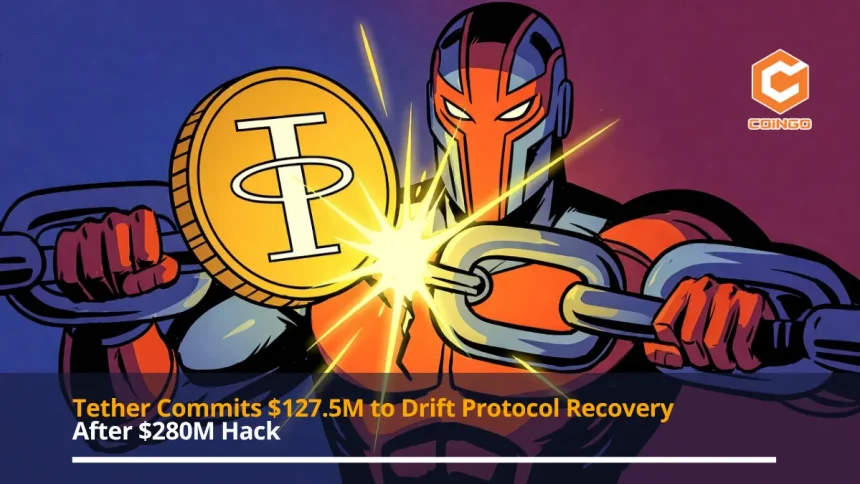
Tether will lead a $150 million recovery program for Drift Protocol, the Solana-based decentralized exchange that lost approximately $280 million in an exploit earlier this month. Tether is contributing $127.5 million directly, with the remaining funds coming from undisclosed partners. As part of the deal, Drift will switch its settlement asset from Circle‘s USDC to Tether’s USDt when the platform relaunches.
Recovery Tied to Trading Activity, Not Upfront Capital
The recovery structure is designed to restore user balances over time rather than through a single lump-sum payment. Tether described the mechanism as linking funding to ongoing trading activity on the Drift platform, meaning that as the exchange returns to normal operations and generates volume, user funds will be progressively reimbursed.
Drift itself will contribute directly to the recovery as trading resumes. The model resembles a revenue-sharing arrangement where the platform’s operational comeback funds the shortfall created by the exploit. This approach avoids placing the entire financial burden on a single entity while giving users a path to recovery tied to the platform’s actual performance.
Drift Switches From USDC to USDt After Circle Criticism
The settlement asset switch from USDC to USDt is a direct consequence of the controversy that followed the hack. Circle came under intense criticism for failing to freeze USDC wallets linked to the attacker despite having a window of several hours to intervene.
The exploiter used Circle’s own Cross-Chain Transfer Protocol (CCTP) to move over $232 million in USDC from Solana to Ethereum across more than 100 transactions over six hours. Blockchain investigator ZachXBT noted that despite the funds passing through Circle’s native bridge, no USDC was frozen during the process. The attacker has been linked to North Korea by blockchain analytics firm Elliptic.
Circle’s stock dropped roughly 10% on April 9 following the backlash and analyst downgrades. The shares have since recovered about 20%, but the reputational damage opened the door for Tether to position USDt as the default settlement stablecoin on a major Solana DEX.
Drift Protocol Exploit and Recovery Summary
| Detail | Value |
| Total Exploit Loss | ~$280M |
| Recovery Program Size | $150M |
| Tether Contribution | $127.5M |
| USDC Moved via CCTP | $232M (100+ transactions) |
| Time Window (Unfrozen) | 6+ hours |
| Attacker Attribution | North Korea (Elliptic) |
| Settlement Asset Switch | USDC to USDt |
| Circle Stock Impact | -10% (Apr 9), since recovered |
A New Playbook for Post-Exploit Recovery
The Drift recovery deal represents an emerging pattern in DeFi : rather than leaving exploited platforms and their users to absorb losses alone, industry players are stepping in with structured recovery programs that blend direct capital with revenue-linked reimbursement.
For Tether, the strategic value is clear. The $127.5 million commitment buys a settlement asset migration on one of Solana’s largest DEXs, expanding USDt’s footprint in a DeFi ecosystem that has historically leaned toward USDC. For Drift, the deal provides a funded relaunch path and a high-profile partner that signals stability to returning users.
The broader question the incident raises is about stablecoin issuers’ responsibility during exploits. Circle’s decision not to freeze the USDC moving through its own infrastructure cost it market share on a major venue. Whether that precedent pushes other platforms to reconsider their default stablecoin or prompts Circle to change its freeze policies will be one of the defining dynamics in the stablecoin competitive landscape through the rest of the year.