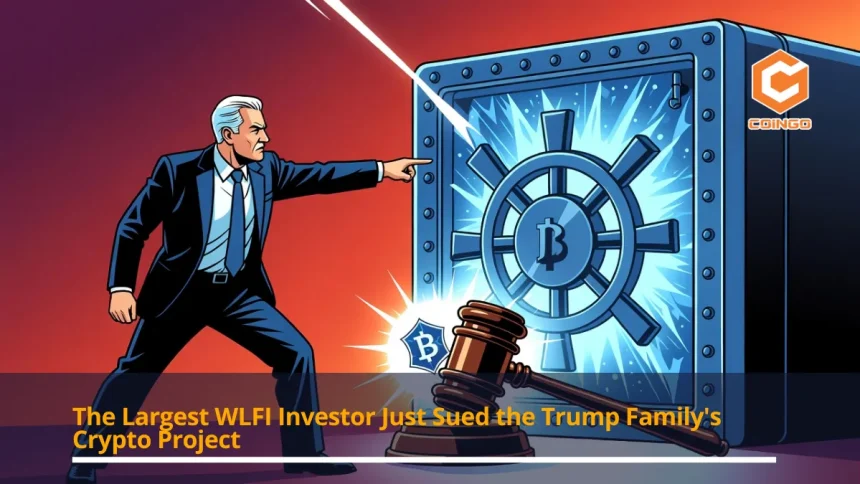
Tron founder Justin Sun filed a federal lawsuit in the US District Court for the Northern District of California on April 21 against World Liberty Financial, the DeFi project backed by Donald Trump and his family. The complaint accuses World Liberty’s leadership of fraud, breach of contract, extortion, and an illegal scheme to seize property, and it seeks an injunction to unfreeze Sun’s 2.9 billion WLFI tokens. Those holdings were once worth over $1 billion at peak and are valued at roughly $75 million today after the WLFI price collapse.
The case is the most significant legal escalation to date against a Trump-affiliated crypto venture, and it comes from the single largest early investor in that venture. Sun contributed a total of $75 million to WLFI in late 2024, served as an advisor to the project, and was once publicly credited by the team for rescuing the launch from a slow start.
The Blacklist Function Nobody Was Told About
The core technical allegation is that World Liberty silently modified the WLFI smart contract in August 2025 to add a blacklisting function that allows the company to freeze tokens in specific wallets without a governance vote. The complaint alleges the upgrade was deployed to the public blockchain but buried in the code without any notice to holders, even as token holders had just approved a separate proposal to make part of the supply tradeable.
Sun’s lawyers phrased it directly in the filing. In the dark of night, the company thus created a blacklisting function that it could wield at will. The freeze function was then used against Sun’s wallet in September 2025, locking 595 million unlocked WLFI and roughly 2.4 billion locked tokens after he moved approximately $9 million in what he described as routine test transfers.
What Sun Says Happened Behind the Scenes
The complaint alleges that once Sun’s position was frozen, World Liberty used it as leverage. Sun claims the team pressured him to mint $200 million of the project’s USD1 stablecoin on his Tron blockchain and to keep investing on their terms. When he refused, co-founder Chase Herro allegedly made two separate threats: one to burn Sun’s tokens unless he publicly requested the burn himself, and another to report Sun to US authorities over purportedly inadequate KYC documentation.
The filing also claims that the blacklist served a secondary purpose of market manipulation. Preventing one of the largest holders from selling propped up the WLFI price at a moment when the project was still raising capital. To date, World Liberty has raised roughly $550 million through WLFI token sales, which the complaint frames as a 2,400% increase since Sun’s initial investment validated the project to the broader market.
On the Verge of Collapse
A striking line in the complaint states that World Liberty is on the verge of collapse and questions whether the project holds enough reserves to back its USD1 stablecoin. The filing alleges that up to 95% of token sale proceeds are planned to be paid to company insiders. World Liberty published a governance proposal on April 15 that would impose two-year cliffs and multi-year vesting schedules on advisor, founder, team, and partner tokens, totaling more than 45 billion WLFI, with a mandatory 10% burn on opt-in.
Investors who do not actively accept the new terms would have their tokens locked indefinitely under existing conditions. Because Sun’s position was frozen in September, he cannot vote his early investor tokens on the proposal at all. He called the proposal bad for the community in a public post and said the freeze is exactly what prevents him from opposing it through governance channels.
The Political Tightrope
Sun has been careful to separate the lawsuit from his political stance. In a post on X accompanying the filing, he said he remains an ardent supporter of President Trump and his administration and framed the dispute as targeting certain individuals on the World Liberty project team rather than the president or his family directly. He also stated his belief that Trump himself would not condone the alleged actions if he were aware of them.
That framing matters for Sun personally. He avoided US travel for years out of concern over an SEC civil fraud case and a Department of Justice inquiry. The SEC dropped its lawsuit against him in February 2025. A separate settlement with the agency in March 2026 cost him a $10 million fine without any admission of wrongdoing. His legal footing in the US has improved considerably during the Trump administration, and the lawsuit is structured to preserve that trajectory.
What This Tests for DeFi
The case is the clearest legal test yet of whether US courts will treat centralized freeze controls inside DeFi smart contracts as legally permitted property actions or as unlawful seizures. Sun is suing for breach of contract, fraud, conversion, and injunctive relief, with damages to be determined at trial. The outcome will set a reference point for every DeFi project that has quietly included similar admin controls in its contracts without surfacing them to holders.
A spokesperson for World Liberty Financial said they had no comment on the lawsuit. Portions of the complaint remain under seal because of confidentiality provisions, and Sun’s team is giving World Liberty the opportunity to decide whether the redacted sections should stay sealed. WLFI was trading at roughly $0.079 as the filing became public, barely changed on the day.
For WLFI holders outside the insider circle, the stakes are immediate. If Sun’s allegations are correct, every wallet holding the token sits under the same blacklist function that locked his position, and the governance path for opposing the new vesting proposal is available only to those whose tokens were not already frozen. The court will decide whether that combination is a legal business practice or an actionable scheme. Everyone else is waiting on the docket.