Hyperliquid
Hyperliquid started as a perpetual futures DEX and turned into something larger: a custom Layer 1 blockchain that now handles spot trading, tokenized equities, commodity perps, and prediction markets. It commands roughly 70% of all on-chain perpetual futures open interest, processes over 200,000 orders per second, and took zero venture capital to get there. The HYPE airdrop distributed 31% of supply directly to users instead of VCs, which is part of why the token sits at a market cap above $9 billion. The coverage here tracks the full Hyperliquid ecosystem: protocol upgrades from HIP-1 through HIP-4, volume and fee dynamics, competitive positioning against centralized exchanges and rival DEXs, token mechanics including the 97% fee-to-buyback loop, and the regulatory questions that come with running the world’s most active perp DEX while geo-blocking the United States.
The platform’s expansion follows a specific pattern. HIP-3 opened permissionless perpetual futures for stocks, commodities, and forex, now accounting for over 35% of platform volume. HIP-4 added fully collateralized binary prediction markets with zero fees to open, directly targeting Polymarket and Kalshi. The architectural pitch: no other platform in crypto offers spot, perps, tokenized equities, and prediction markets natively on a single execution layer, all from one margin account.
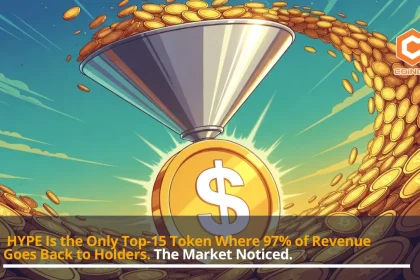
Competition is heating up on multiple fronts. Aster captured over 50% of DEX perp volume briefly after launch. Polymarket is preparing its own token. Kalshi launched perpetual futures under the name Timeless. Meanwhile, the CFTC has stated plans to “onshore” decentralized markets like Hyperliquid, and multiple U.S. spot ETF filings for HYPE are advancing through the SEC. The fee model ties it all together: 97% of protocol fees flow into buying back and burning HYPE, creating a direct link between trading volume and token demand. The counterargument: the validator set is relatively centralized, U.S. geo-blocking creates legal ambiguity rather than compliance, and a significant portion of supply sits with core contributors on a multi-year vesting schedule.
Coingo covers the protocol upgrades, the volume data, the competitive moves from rivals trying to claw back market share, the ETF filings that could open institutional access, and the regulatory signals that will determine whether Hyperliquid’s offshore model survives contact with U.S. enforcement priorities. The platform is building fast. The question is whether it is building in the right jurisdiction.