
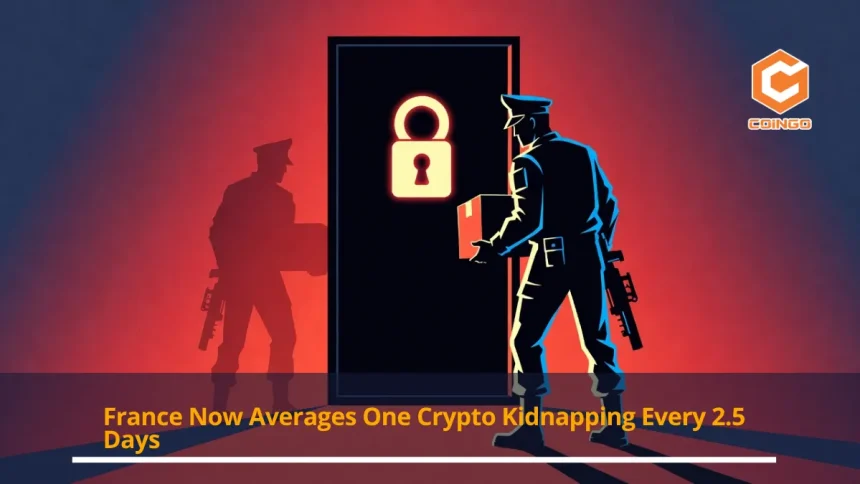
A man disguised as a delivery driver forced his way into a family home in Saint-Jean-de-Védas, near Montpellier, on April 11. He pulled a handgun, forced the parents and their children into a room, and demanded crypto. The father fought back. A shot was fired. No one was injured. A 25-year-old suspect was later arrested and charged. French authorities confirmed it was the first reported crypto-motivated home invasion in the Hérault region, but it is far from an isolated case. France has now recorded 41 crypto-related kidnappings and home invasions since January, averaging one every 2.5 days.
The Numbers Behind the Crisis
Globally, so-called wrench attacks jumped 75% in 2025 to 72 verified cases with over $40 million in confirmed losses, according to blockchain security firm CertiK. France led all countries with 19 confirmed incidents last year. Europe as a whole accounted for roughly 40% of global cases.
The 2026 trajectory is far worse. At the current pace, France could see over 100 crypto kidnappings this year, more than the entire global total from 2025. The attacks are not random street crimes. They are organized operations involving reconnaissance, disguises, and planned extraction of digital assets. Criminals know that crypto transfers cannot be reversed, there is no bank to call, and the victim often has direct access to the funds from their home.
Data Leaks Are Building the Target Lists
What makes France’s situation uniquely dangerous is the supply of targeting data. In January 2026, hardware wallet manufacturer Ledger disclosed that a breach at its payment partner Global-e had exposed names, contact details, and order information for hardware wallet buyers. This created a high-quality list of confirmed crypto holders tied to physical addresses.
Separately, French crypto tax service Waltio suffered a breach that allegedly exposed emails and tax reports for up to 50,000 users. Even more concerning, French media reported that a tax office employee had been selling sensitive lookup data about crypto investors to criminal groups. When government databases and financial service platforms both leak, attackers no longer need to guess who holds crypto or where they live. The information is available for purchase.
Americans Lost Over $11 Billion to Crypto Scams in 2025. The FBI’s IC3 Report Shows How.
Severed Fingers, Fake Police, and Family Targets
The severity of these attacks has escalated well beyond simple robbery. In January 2025, Ledger co-founder David Balland and his partner were kidnapped. The attackers severed one of his fingers and sent it to associates as part of a ransom demand. He was rescued after a police operation.
In February 2026, six suspects were arrested over the abduction of a magistrate and her mother in a plot targeting the magistrate’s partner, a crypto entrepreneur. The victims were held in a garage for 30 hours before escaping with help from neighbors. In March, criminals impersonating police officers forced a French couple in their late 50s to transfer nearly $1 million in Bitcoin.
The most recent high-profile case occurred on April 13, when four attackers stormed a family home in Burgundy, demanding $400,000 from a crypto entrepreneur. When they discovered his holdings were secured in a time-locked wallet, they kidnapped his wife and 11-year-old son. France’s elite GIGN unit deployed 100 officers and freed both victims from a hotel room the following day. No ransom was paid.
Government Response and Industry Precautions
At Paris Blockchain Week, French minister Jean-Didier Berger acknowledged the scale of the problem and announced that a prevention platform for crypto holders had been launched, drawing thousands of sign-ups. He said a broader protection plan is being developed with Interior Minister Laurent Nuñez and is expected within weeks.
Lawmaker Paul Midy has introduced legislation to automatically remove business leaders’ home addresses from public records, targeting a key vector used in attacks. The security upgrades were visible at the Paris conference itself, where a police motorcade escorted VIP guests to a dinner at the Palace of Versailles and reinforced security surrounded the Carrousel du Louvre venue.
Security researchers recommend that crypto holders adopt multi-signature wallets, enable withdrawal delays and spending limits, and practice operational security by minimizing public visibility of holdings. Time-locked wallets, which restrict access to funds until a preset future date, have already proven effective. In the Burgundy case, the time lock rendered the attackers’ demand impossible to fulfill, buying critical time for law enforcement.
The pattern is clear: crypto crime is migrating from code exploits to physical coercion. As digital security improves, criminals are targeting the one vulnerability that cannot be patched: the person holding the keys.