The Problem Bitcoin Was Built to Solve
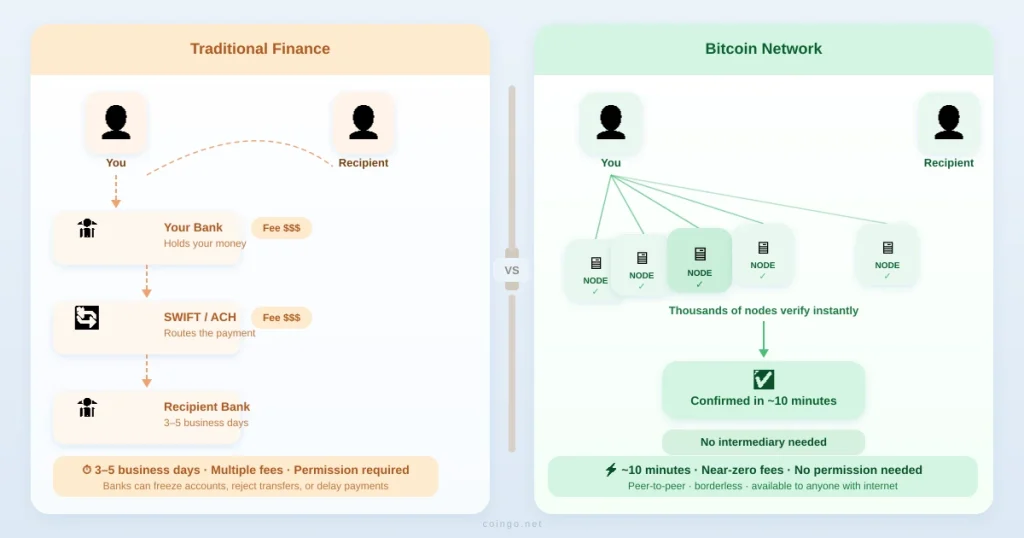
Long before Bitcoin existed, sending money across borders was slow, expensive, and riddled with middlemen. Banks acted as gatekeepers, processing every transaction and taking their cut along the way. For billions of people without access to traditional banking infrastructure, this wasn’t just inconvenient — it was exclusionary.
In 2008, an individual or group using the pseudonym Satoshi Nakamoto published a nine-page white paper titled “Bitcoin: A Peer-to-Peer Electronic Cash System.” The core idea was elegantly simple: create a digital currency that lets two parties transact directly with each other — no bank, no payment processor, no permission needed.
The Bitcoin network went live in January 2009 with the mining of the first block, which Satoshi embedded with a now-famous message referencing a newspaper headline about bank bailouts. It was a quiet but pointed commentary on the financial system Bitcoin was designed to circumvent.
What Exactly Is Bitcoin?
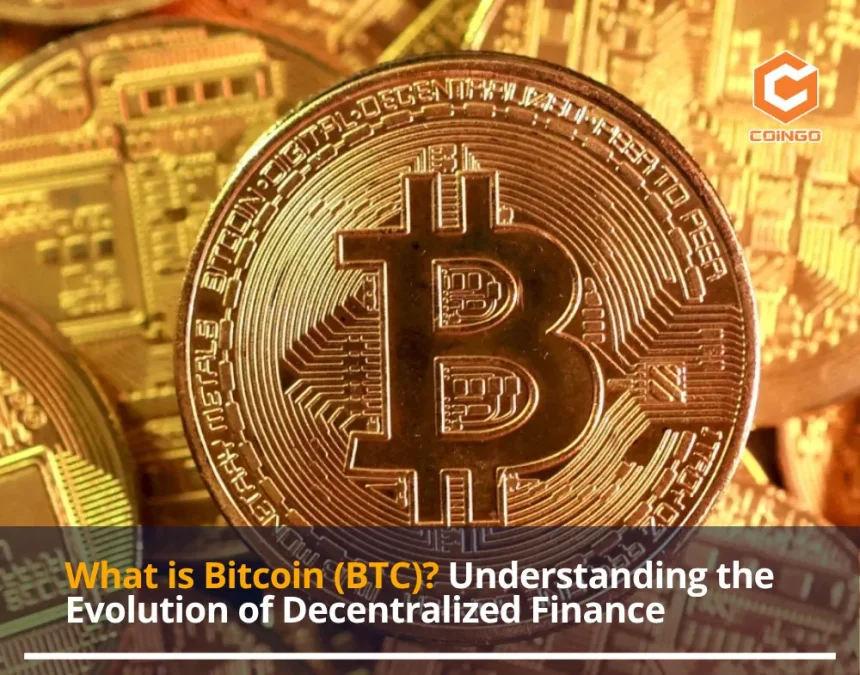
Bitcoin is a decentralized digital currency. That might sound abstract, so let’s break it down into parts that actually make sense.
Decentralized — No single person, company, or government controls Bitcoin. The network is maintained by thousands of computers (called nodes) spread across the globe. When one shuts down, the network continues. To take down Bitcoin, you would effectively need to shut down the entire internet.
Digital — Bitcoin exists only in digital form. There are no physical coins. Your “bitcoin” is really just an entry on a publicly visible ledger that records who owns what.
Currency — Bitcoin functions as a medium of exchange, a unit of account, and — increasingly — as a store of value. Many investors compare it to digital gold, citing its scarcity and durability as monetary properties.
One important stylistic note: when people write “Bitcoin” with a capital B, they’re referring to the network or the protocol. When they write “bitcoin” with a lowercase b, they mean the individual coins or units. The ticker symbol on markets is BTC.
How Does Bitcoin Actually Work?
Understanding Bitcoin’s mechanics doesn’t require a computer science degree. At its core, it relies on three interlocking concepts: a shared ledger (the blockchain), a process for verifying transactions (consensus), and an incentive system to keep the whole thing running (mining).
The Blockchain: A Ledger Nobody Owns
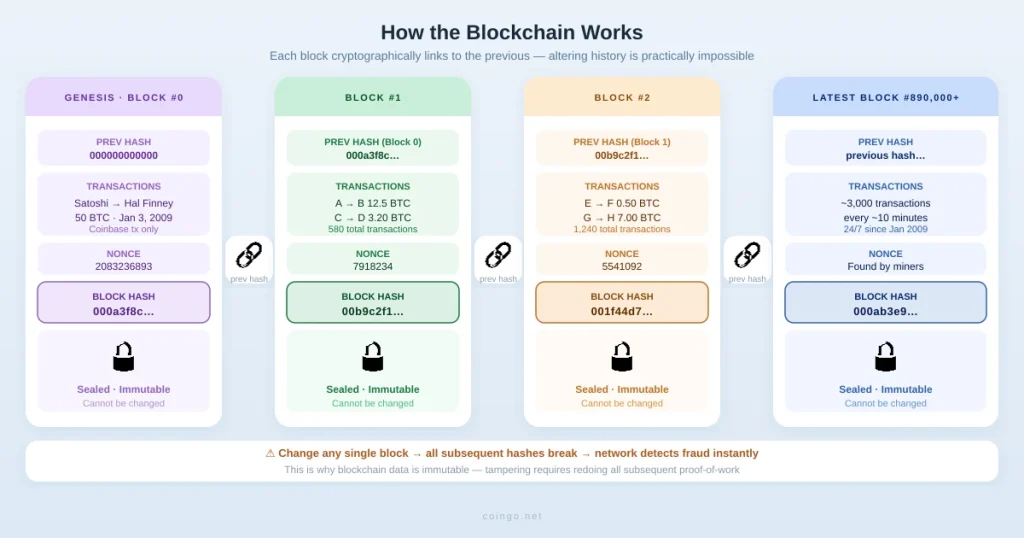
Think of the blockchain as a massive, public record book that tracks every bitcoin transaction ever made. Instead of being stored in one place (like a bank’s database), this ledger is copied across thousands of computers worldwide simultaneously.
Every few minutes, a new “block” of confirmed transactions gets added to the chain. Each block is mathematically linked to the one before it, creating an unbroken chronological history stretching back to the very first transaction in 2009. Crucially, once data is recorded in the blockchain, it cannot be altered without redoing enormous amounts of computational work — making fraud practically impossible.
How Transactions Get Confirmed
When you send bitcoin to someone, that transaction is broadcast to the entire Bitcoin network. Thousands of nodes independently check whether you have the funds you’re claiming to send and whether your authorization is valid. If the majority of nodes agree the transaction is legitimate, it gets bundled into the next block.
This distributed verification process is what makes Bitcoin remarkably resistant to censorship and fraud. Even if a handful of nodes tried to approve a fake transaction, the broader network would reject it. There is no single point of failure.
Mining and Proof-of-Work
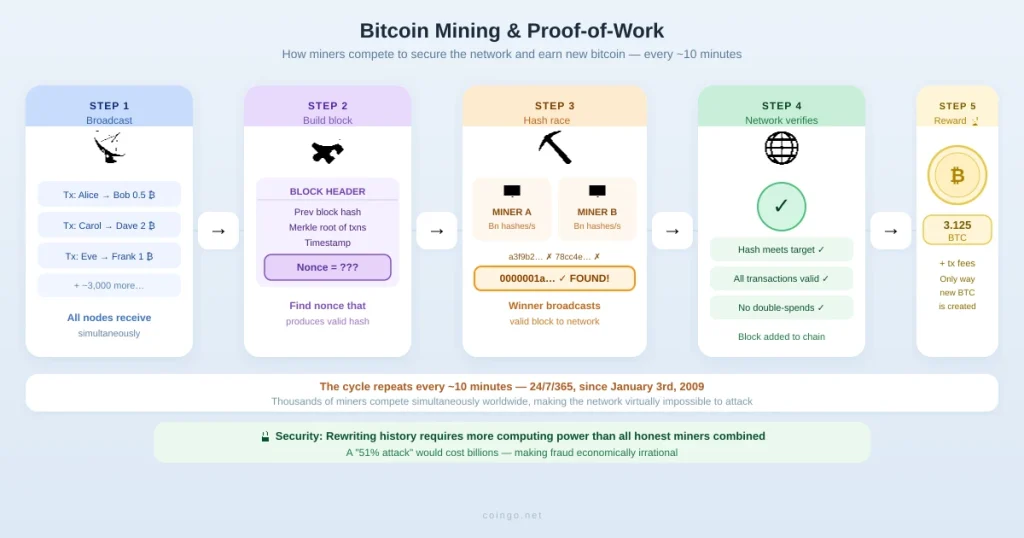
A special class of participants called miners plays the role of securing each new block. Mining is fundamentally a computational competition: miners repeatedly try different numbers (called “nonces”) until one of them produces a hash — a unique numerical fingerprint — that meets the network’s criteria. This process is intentionally difficult, requiring significant computing power and electricity.
The first miner to solve the puzzle broadcasts the valid block to the network and receives a reward: newly created bitcoin. This is the only way new bitcoin enters circulation. It’s also why Bitcoin’s energy usage is a frequent topic of discussion — the work isn’t arbitrary waste but a deliberate security mechanism. Attacking the network would require controlling more computing power than the entire honest mining community combined, which makes large-scale fraud economically irrational.
What Gives Bitcoin Its Value?
This is the question skeptics ask most often — and it’s a fair one. The short answer is: the same thing that gives any money its value. Scarcity, utility, and collective agreement.
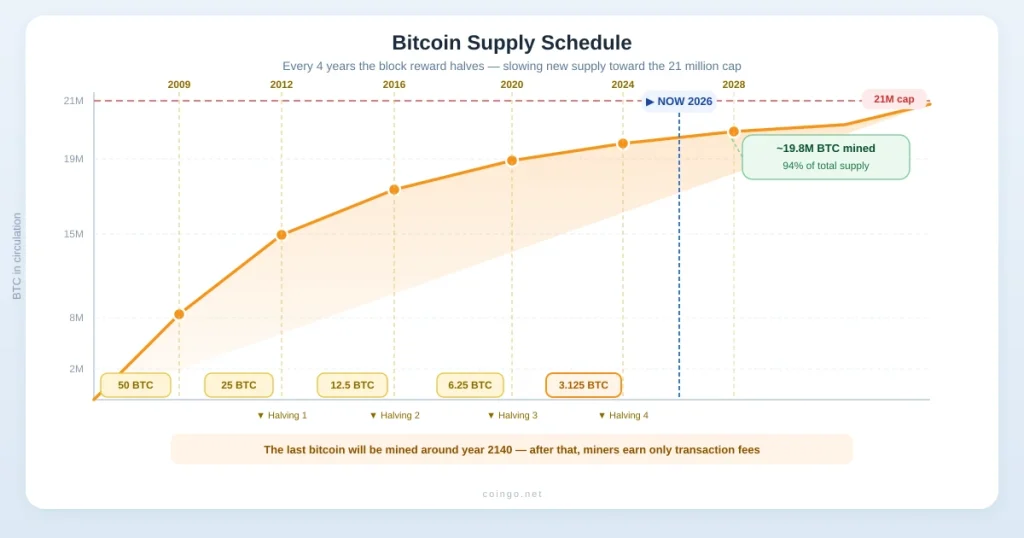
Scarcity: There will only ever be 21 million bitcoin. This hard cap is written into Bitcoin’s code and has never changed. By comparison, central banks can print fiat currency without a fixed limit, which erodes purchasing power over time. Bitcoin’s fixed supply is often cited as a hedge against inflation.
Divisibility: One bitcoin is divisible into 100 million units called satoshis (or “sats”). This means you don’t need to buy a whole bitcoin to participate. Fractions as small as a single satoshi can be sent and received.
Durability and portability: Unlike gold, which is heavy and difficult to transport, bitcoin can be sent to anyone on earth in minutes without a physical intermediary. Unlike cash, it can’t be physically destroyed or counterfeited.
Network effects: The more people and institutions accept and use Bitcoin, the more valuable and useful the network becomes. Since 2009, Bitcoin ownership has grown from zero users to an estimated 100+ million holders worldwide, with increasing adoption by institutional investors and major corporations.
Bitcoin vs. Gold vs. Fiat Money
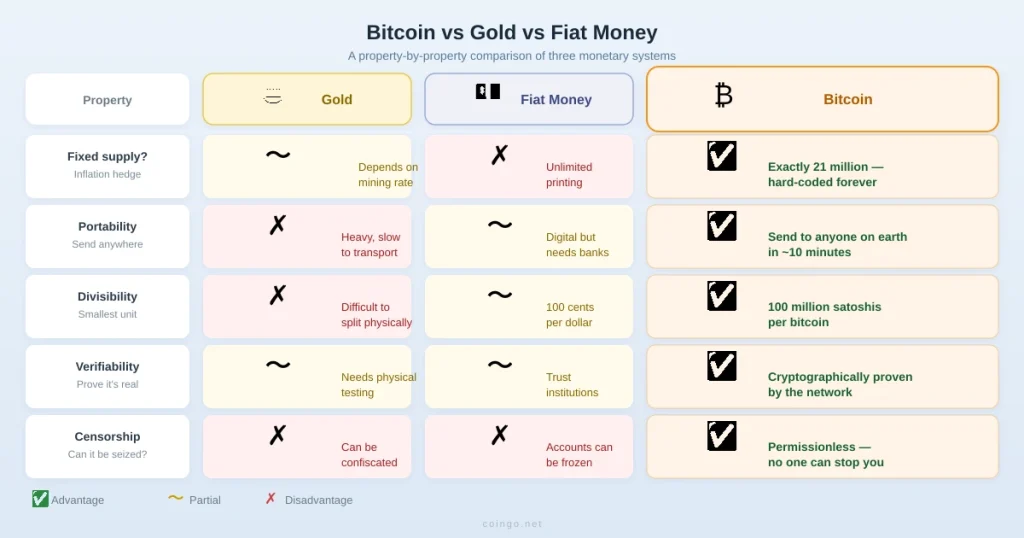
Bitcoin is often positioned as “digital gold,” and the comparison holds up in some important ways. Both are scarce, durable, and not controlled by any government. Gold has been trusted as a store of value for thousands of years; Bitcoin proponents argue it improves on gold in almost every dimension: it’s more portable, easier to verify, and its supply is mathematically predictable rather than dependent on how much mining companies choose to extract.
Compared to fiat currencies (dollars, euros, yen), Bitcoin operates by different rules. Governments can debase fiat currencies by printing more. Bitcoin’s supply schedule, by contrast, is governed by code: every four years, the mining reward is cut in half in an event called the “halving.” This gradual reduction in new supply mirrors the diminishing returns of gold mining and is a core part of Bitcoin’s deflationary design.
Who Controls Bitcoin?
Nobody does — and that’s by design. Bitcoin‘s open-source codebase can be reviewed by anyone and has been contributed to by thousands of developers since its launch. Changes to the protocol require broad consensus among miners, node operators, developers, and the broader community of holders and businesses that rely on it.
This governance model is deliberately slow and conservative. Significant changes to Bitcoin’s core rules require near-universal agreement, which makes the network predictable and resistant to arbitrary manipulation. Critics argue this makes Bitcoin hard to upgrade; supporters argue it’s exactly what makes Bitcoin trustworthy.
Is Bitcoin Legal and Safe?
In the vast majority of countries, including all major Western democracies, owning and transacting with bitcoin is perfectly legal. A handful of countries have attempted to restrict or ban it, but enforcing such bans is difficult given Bitcoin’s decentralized architecture — you can’t block a network that has no headquarters.
From a security standpoint, the Bitcoin network itself has never been successfully hacked. What does happen — and what people mean when they say “bitcoin was stolen” — is usually the theft of private keys from individuals or the compromise of custodial platforms. If you hold your own keys in a properly secured wallet, your bitcoin is protected by the same cryptographic principles that secure the network at large.
How to Use Bitcoin in Practice
To hold and use bitcoin, you need a wallet — software that stores your private keys and lets you send and receive funds. Wallets come in several forms: software apps on your phone or desktop, hardware devices that store keys offline, and web-based wallets offered by exchanges.
Bitcoin can be used for a growing range of purposes. It’s accepted as payment by companies like Microsoft, PayPal, and numerous online retailers. It’s used for cross-border remittances, where it offers significant speed and cost advantages over traditional wire transfers. And it’s increasingly held as a long-term investment asset, with major financial institutions now offering Bitcoin exposure through regulated investment products.
The Bigger Picture: Why Bitcoin Still Matters
Seventeen years after its launch, Bitcoin remains the most widely recognized and adopted cryptocurrency in the world. It’s not just a speculative asset — it’s a proof of concept that fundamentally changed how people think about money, ownership, and trust.
For people in countries with unstable currencies or restricted financial systems, Bitcoin represents something more immediate: access to a monetary network that no government can unilaterally shut down, devalue, or take away. That utility — financial sovereignty — is arguably Bitcoin’s most powerful and lasting contribution.
Whether you’re approaching Bitcoin as an investor, a technologist, or simply someone trying to understand a financial system that’s becoming harder to ignore, the starting point is the same: understand what it is, how it works, and what problem it was built to solve. Everything else follows from there.
Key Takeaways
→ Bitcoin is a decentralized digital currency with a fixed supply of 21 million coins.
→ It runs on blockchain technology — a public, tamper-resistant ledger maintained by thousands of computers globally.
→ Transactions are validated through a consensus process called proof-of-work, executed by miners.
→ No single entity controls Bitcoin — changes to the protocol require broad community consensus.
→ Bitcoin is legal in most countries and the network itself has never been successfully hacked.
→ Its value comes from scarcity, utility, security, and a growing global network of users and institutions.
Once you understand how Bitcoin works, the next step is moving it. Our Bitcoin transfer guide walks through sending and receiving BTC, including fees, confirmations, and what to check before you hit send.