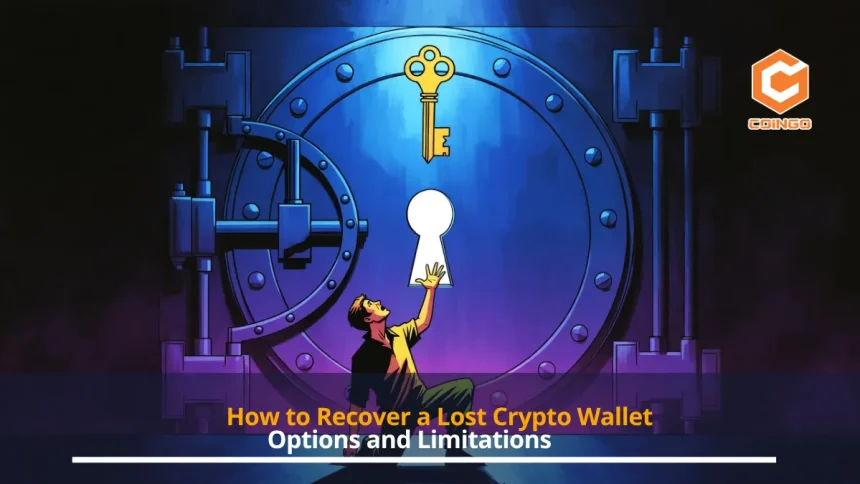
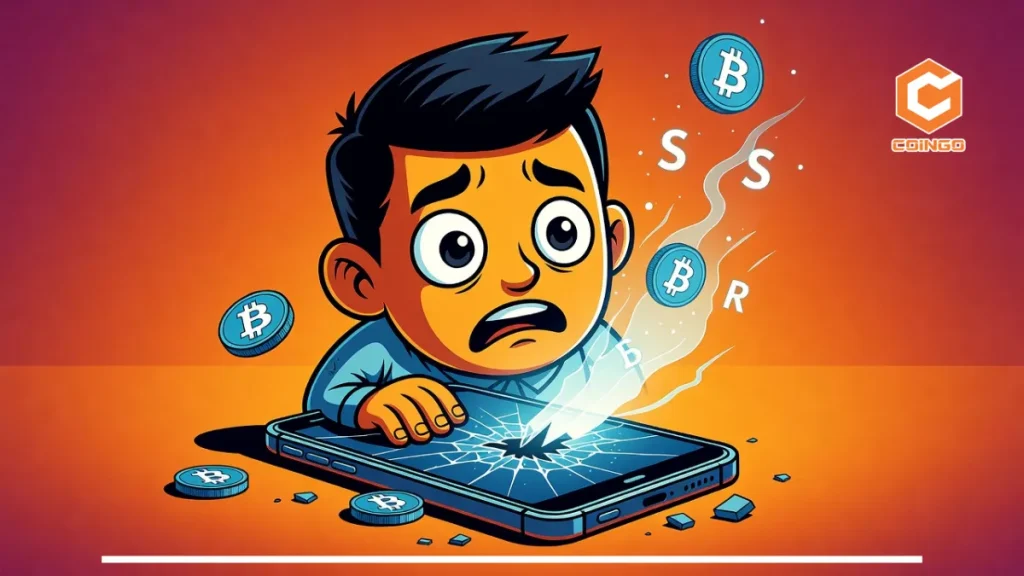
Losing access to a crypto wallet is one of the most stressful experiences in the digital asset space. Unlike a forgotten bank password, there is no customer service hotline that can reset your credentials and hand you back your funds. The decentralized nature of crypto means that you are the bank. And if you lose the keys, the vault stays locked. According to Ledger analysts, between 2.3 and 3.7 million BTC is permanently lost as of early 2025, worth tens of billions of dollars at current prices. Understanding what recovery options exist, and their real-world limitations, can mean the difference between recovering your assets and losing them forever.
Custodial vs. Non-Custodial: The Recovery Gap
The first thing to determine is what type of wallet you lost access to, because this fundamentally changes your options.
Custodial wallets are accounts on centralized platforms like Coinbase, Kraken, or Binance. These platforms manage your private keys on your behalf. If you forget your password, you can reset it through standard email or KYC verification, just like a traditional bank account. The platform holds the keys, so the platform can restore your access. This is the easiest recovery scenario.
Non-custodial wallets like MetaMask, Trust Wallet, Phantom, or Ledger hardware devices are a different story. These wallets give you full control, but that control comes with full responsibility. The wallet provider never sees or stores your seed phrase or private key. If you lose both your password and your seed phrase, recovery ranges from extremely difficult to mathematically impossible.
Cold Wallet vs Hot Wallet: Which Is Right for Your Holdings
| Scenario | Recovery Difficulty | Outcome |
|---|---|---|
| Lost password, have seed phrase | Easy | Full recovery via wallet restore |
| Lost password on custodial exchange | Easy | Reset via email/KYC |
| Lost seed phrase, have wallet file | Hard | Brute force if password is weak |
| Missing 1-2 seed words | Moderate | Computational recovery possible |
| Lost seed phrase and password entirely | Near impossible | Funds likely lost permanently |
If You Have Your Seed Phrase, Recovery Is Straightforward
A seed phrase (also called a recovery phrase or mnemonic phrase) is a sequence of 12 or 24 words generated when you first set up your wallet. This phrase is the master key. It mathematically generates all the private keys in your wallet and can restore your entire portfolio on any compatible device.
If you still have your seed phrase but lost access to your device or forgot your password, recovery is simple. Download the same wallet application (or any compatible wallet that supports the BIP39 standard), select “Import Wallet” or “Restore from Seed Phrase,” and enter your words in the exact correct order. The wallet will regenerate all your private keys and restore access to your funds. You will then set a new password for local access.
The critical detail: word order matters. Even one word out of sequence will restore a completely different wallet, or fail entirely. If your wallet used non-standard derivation paths, you may need to check settings or try alternative compatible wallet software if funds do not appear immediately after restoration.
If You Lost Your Seed Phrase
This is where things get difficult. Without a seed phrase, your options depend entirely on what other information or files you still have.
Search everywhere first. Before assuming your seed phrase is gone, check old notebooks, photos on your phone (many people photograph their seed phrase during setup), password managers, encrypted files, email drafts, cloud storage, and any USB drives or old devices. People often store backup information in places they forget about.
Wallet file + brute force. Some wallet applications (like Bitcoin Core) store encrypted wallet files (.dat files) on your device. If you have this file but forgot the password, specialized recovery tools can attempt millions of password combinations. If your original password was short or based on a predictable pattern, this approach can work. Tools like hashcat and BTCRecover (available on GitHub) are commonly used. Never download recovery tools from unknown forums or links.
Missing 1-2 words. If you have most of your seed phrase but are missing one or two words, computational recovery is feasible. The BIP39 standard uses a wordlist of exactly 2,048 words. If you know 11 of 12 words and the position of the missing word, there are only 2,048 possibilities to try. Specialized tools can run through these combinations in seconds. Missing two words is harder but still computationally possible, with roughly 4.2 million combinations to test.
Lost everything. If you have lost both your seed phrase and your password with no wallet file backup, your funds are almost certainly inaccessible. No legitimate service can recover a seed phrase from nothing. The cryptographic security that protects your wallet from hackers is the same security that prevents recovery without the proper credentials.
Recovery Scams Are Everywhere
The desperation of losing access to a crypto wallet makes victims highly vulnerable to scams. The FBI estimated that cryptocurrency fraud losses exceeded $9.3 billion in 2024, with a disproportionate share affecting people over 60 who fell victim to recovery scams while trying to retrieve lost funds.
Legitimate recovery services exist, but they operate within clear boundaries. Red flags to watch for include anyone who guarantees 100% recovery, demands upfront payment before any work is done, asks you to share your seed phrase (a legitimate service would never need this), or contacts you unsolicited on social media or forums. Real recovery firms work on a success-fee basis, provide documentation of their methods, and have verifiable track records.
New Technology Is Eliminating the Problem
The most significant development in wallet security is the emergence of architectures that eliminate seed phrases entirely, removing the single point of failure that has caused hundreds of billions in permanent losses.
Multi-Party Computation (MPC) wallets split private keys into mathematically linked fragments distributed across multiple locations: your device, the wallet provider’s servers, cloud storage, or trusted contacts. No single party ever possesses the complete key. If one fragment is lost, the remaining fragments can reconstruct access. This approach is already used by institutional custodians and is increasingly available to retail users.
Social recovery wallets allow users to designate trusted contacts (called guardians) who can collectively authorize wallet recovery. If you lose access, a majority of your guardians can approve a key rotation that restores your control. This mirrors how traditional society handles access: spare keys with trusted neighbors, emergency contacts on medical forms, beneficiaries on financial accounts.
The DeRec Alliance, formed by Hedera, Algorand, and other major protocols, is working on standardizing decentralized recovery mechanisms across different blockchain ecosystems. Account abstraction features on Ethereum are also enabling wallets with built-in recovery logic, spending limits, and time-locked security features that reduce dependence on a single seed phrase.
Prevention Is the Only Reliable Strategy
Recovery options exist, but they are limited, expensive, and often unsuccessful. The only truly reliable approach is prevention.
Write your seed phrase on durable physical material (metal backup plates are widely available) and store it in at least two separate secure locations, such as a home safe and a safety deposit box. Never store your seed phrase digitally on a computer, phone, or cloud service, as these can be compromised by malware. Never share it with anyone. Consider using a passphrase (sometimes called a 25th word) for an additional layer of protection. Enable two-factor authentication on every exchange account. And for significant holdings, use a hardware wallet with the seed phrase stored separately from the device itself.
The uncomfortable reality of self-custody is that the same security model that makes your crypto resistant to seizure and censorship also makes it resistant to recovery. The technology is improving, but for now, the responsibility remains with the holder. Protect your keys as if your financial future depends on it, because in crypto, it does.