Pi Coin
Pi Network (PI) is a mobile-first cryptocurrency project aiming to make digital assets accessible to a broader audience — covering PI token price dynamics, network development progress, mainnet transition, token unlock schedules, user adoption trends, ecosystem expansion, and the challenges of scalability and real-world utility in emerging crypto networks, analyzed through a data-driven perspective and evolving market context.
The project’s distinguishing feature is its mobile mining model, which allows users to earn PI through a phone app without specialized hardware or significant energy cost. This approach has built one of the largest single-token user bases in crypto, with over 421,000 active nodes operating across more than 1 million CPUs and roughly 10 billion PI already migrated to mainnet. The trade-off is that scale of users does not automatically translate into developer activity, transaction throughput, or institutional adoption — three metrics where Pi continues to lag established Layer-1 networks.
Pi’s roadmap is unusually compressed for a chain of its size. The Protocol 22.1 upgrade in April 2026 enforced a hard deadline for node operators to upgrade or be disconnected from the mainnet entirely. Protocol 23.0, scheduled for May 11, brings full smart contract functionality, transforming the chain from a transactional system into a programmable platform where developers can deploy decentralized applications. Four additional protocol milestones — 24.1, 25.1, and 26.0 — are queued for the summer roadmap, representing one of the densest upgrade sequences in any major crypto network.
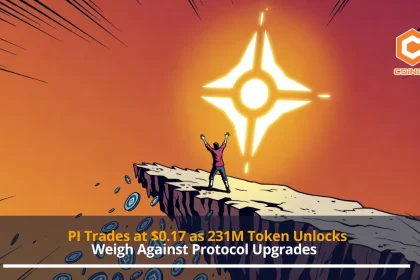
Token economics remain the most contested part of the Pi conversation. Token unlock cycles have weighed on price for months, with $231 million in unlocks already pressuring valuation and roughly 200 million additional PI scheduled to release over rolling 30-day windows. PI has historically traded as a sell-the-news asset around technical milestones, with each protocol upgrade triggering supply pressure rather than re-rating. Whether smart contracts and the Consensus 2026 stage announcements break that pattern is the open question for the second quarter.
Coingo tracks Pi Network’s protocol upgrades, node infrastructure changes, mainnet migration data, token unlock schedules, exchange listings, and the gap between user count and on-chain activity. The goal is to separate technical progress from marketing claims and give readers a clear view of where Pi actually stands relative to its stated ambitions.