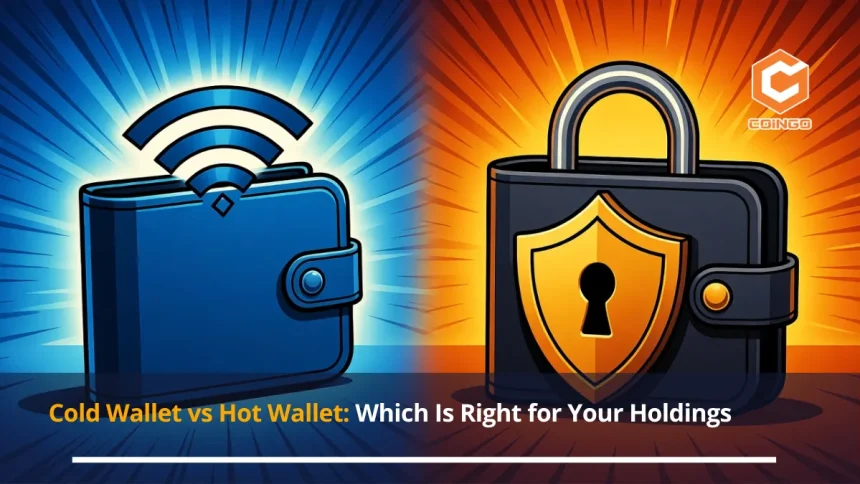
In 2025, over $3.4 billion in cryptocurrency was stolen through hacks, exploits, and social engineering attacks, according to Chainalysis. Personal wallet compromises alone hit 158,000 incidents, affecting 80,000 unique victims and draining $713 million in combined losses. An estimated 62% of all crypto theft targeted hot wallets, the always-online software wallets that most traders use daily. The numbers make the case clearly: how you store your crypto is not a convenience question. It is a security decision with real financial consequences. This guide breaks down the differences between hot and cold wallets, compares the leading options in each category, and provides a practical framework for deciding which setup fits your portfolio.
What Is a Hot Wallet
A hot wallet is a software application that stores your private keys on an internet-connected device. It can run as a mobile app (Trust Wallet, Phantom), a browser extension (MetaMask, Coinbase Wallet), or a desktop application. Hot wallets generate your seed phrase online and keep your private keys accessible through the device’s operating system.
The defining characteristic is persistent internet connectivity. That connection enables instant transactions, seamless interaction with DeFi protocols, NFT marketplaces, and dApps, and real-time portfolio tracking. It also means your keys are exposed to every threat that exists on the internet: phishing attacks, clipboard hijackers, malware, fake browser extensions, and compromised dApp front-ends.
Hot wallets are typically free to download and use. The only costs are network transaction fees (gas fees), which go to the blockchain, not the wallet provider. For traders who interact with DeFi protocols multiple times a day, a hot wallet is effectively mandatory because cold wallets cannot natively sign transactions for most dApps without additional configuration.
What Is a Crypto Wallet? The Complete Guide
What Is a Cold Wallet
A cold wallet stores your private keys on a device that is not connected to the internet. The most common form is a hardware wallet, a small physical device (typically USB-sized) that generates and stores keys internally on a secure element chip. The keys never leave the device. When you want to send a transaction, your computer creates an unsigned transaction, sends it to the hardware wallet, the device displays the details on its own screen for verification, you press a physical button to approve, and only the signed transaction is sent back. At no point does the private key touch the internet.
Some cold wallets are fully air-gapped, meaning they never connect to a computer at all. Devices like Coldcard use QR codes or MicroSD cards to transfer transaction data back and forth, eliminating even USB connectivity as an attack surface. Paper wallets (writing private keys on paper) are technically cold storage but are considered low-security and have largely been replaced by purpose-built hardware devices.
Cold wallets range from $49 to $200+ depending on the model and features. The trade-off for security is convenience: you need physical access to the device every time you want to sign a transaction, and interacting with DeFi protocols requires pairing the hardware wallet with a software interface.
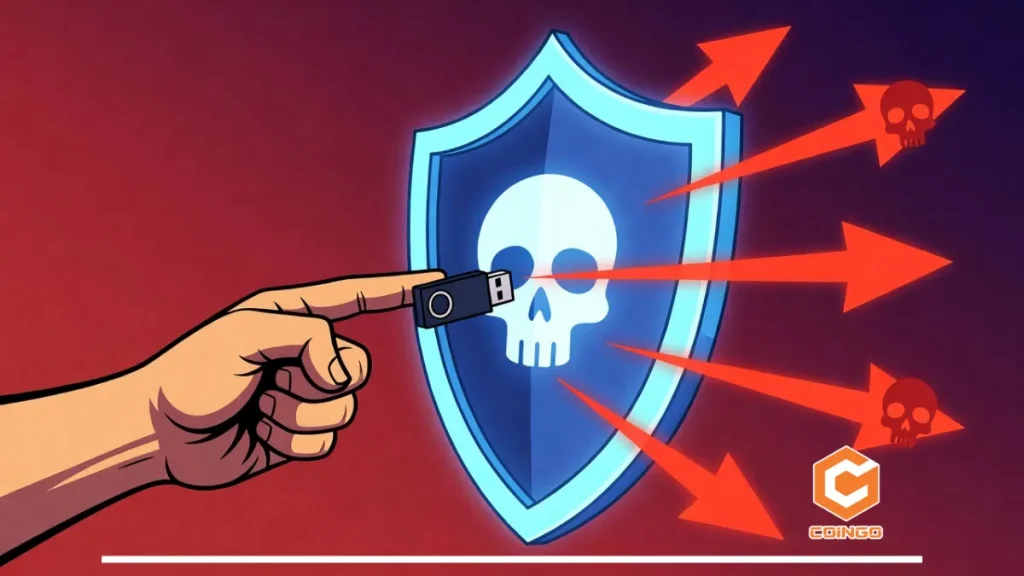
Hot Wallet vs Cold Wallet: Full Comparison
| Feature | Hot Wallet | Cold Wallet |
|---|---|---|
| Connection | Always online | Offline by default |
| Form factor | App (mobile, browser, desktop) | Hardware device, air-gapped device |
| Cost | Free | $49–$200+ |
| Speed | Instant transactions | Requires device connection to sign |
| Security level | Moderate (exposed to online threats) | High (keys never touch internet) |
| DeFi / dApp access | Full native support | Limited (requires pairing) |
| Best for | Daily trading, small balances, DeFi | Long-term holdings, large amounts |
| Risk vector | Phishing, malware, clipboard hijack | Physical theft, lost device, supply chain |
| Examples | MetaMask, Phantom, Trust Wallet | Ledger, Trezor, Coldcard, Tangem |
Why Storage Method Matters: The Numbers
The scale of crypto theft makes wallet security one of the most important decisions any holder can make. Here is what the data shows from 2025 and early 2026:
| Model | Price | Coins | Security Chip | Open Source |
|---|---|---|---|---|
| Ledger Nano S Plus | $79 | 5,500+ | EAL5+ | No |
| Ledger Nano X | $149 | 5,500+ | EAL5+ | No |
| Trezor Safe 3 | $79 | 9,000+ | EAL6+ | Yes |
| Trezor Safe 5 | $169 | 9,000+ | EAL6+ | Yes |
| Coldcard Mk4 | $148 | Bitcoin only | Dual SE | Yes |
| Tangem | $55–$80 | 14,100+ | EAL6+ | Partial |
The single largest phishing loss in crypto history occurred in January 2026: one individual lost $282 million in Bitcoin and Litecoin to a social engineering attack. The victim used hardware wallets but was manipulated into authorizing transactions. This illustrates a critical point: cold storage protects your keys, but it does not protect your judgment. Security is a system, not a single device.
Hardware Wallet Comparison: Ledger vs Trezor vs Coldcard vs Tangem
If you decide to use a cold wallet, the next question is which one. The hardware wallet market grew 31% in 2025 to between $348 million and $565 million, with projections reaching $720-826 million in 2026. Here is how the leading devices compare:
| Metric (2025) | Value |
|---|---|
| Total crypto stolen | $3.4 billion (Chainalysis) |
| Personal wallet compromises | 158,000 incidents, 80,000 victims |
| Value stolen from personal wallets | $713 million |
| Share of theft hitting hot wallets | 62% |
| Largest single phishing loss (Jan 2026) | $282 million (single user) |
| North Korean crypto theft (2025) | $2.02 billion |
| Hardware wallet market growth (2025) | +31% YoY |
| Self-custody preference (2026) | 59% of holders (up from 42% in 2023) |
Ledger offers the broadest coin support and Bluetooth connectivity on the Nano X, but runs closed-source firmware, which means independent security audits of the code are not possible. Trezor is fully open-source, allowing anyone to inspect the firmware, and its Safe 3 model matches Ledger’s entry price at $79 while offering a higher-rated EAL6+ security chip. Coldcard is Bitcoin-only and fully air-gapped, built for users who want maximum isolation for BTC holdings. Tangem takes a mobile-first approach with NFC card-based interaction and supports over 14,000 tokens across 90 blockchains.
Which Wallet for Which Situation
The answer is not one or the other. Most experienced crypto users in 2026 use both. The standard recommendation is a two-tier system:
Hot wallet for daily operations: trading, swaps, minting NFTs, interacting with DeFi protocols, and holding small balances you can afford to lose. Keep only what you need for active use.
Cold wallet for long-term storage: the bulk of your portfolio (80-90% of holdings) stays offline, protected from remote attacks. You only connect the device when you need to move funds.
The threshold for switching to cold storage is generally around $500 to $1,000 in holdings. Below that, a well-secured hot wallet with a strong password, two-factor authentication, and a reputable provider is acceptable. Above that, the cost of a $79 hardware wallet is less than 8% of your portfolio and provides protection against the attack vectors responsible for the majority of crypto theft.
Security Practices That Apply to Both
Regardless of wallet type, certain practices are non-negotiable. Your seed phrase is the master key to your funds. Write it down on paper or stamp it on metal. Never store it digitally, never screenshot it, never paste it into a website. If someone has your seed phrase, they have your crypto, regardless of whether you use hot or cold storage.
Regularly review and revoke token approvals. Every time you interact with a DeFi protocol, you grant it permission to access tokens in your wallet. Unlimited approvals are a common attack vector. Tools like Revoke.cash allow you to check and revoke approvals across multiple chains.
Verify every download and every URL. Fake wallet apps and phishing sites are responsible for hundreds of millions in losses. Only download wallet software from official websites. Bookmark the sites you use and never click links from emails, DMs, or social media posts.
The Bottom Line
The data is clear. Hot wallets are convenient but exposed. Cold wallets are secure but require more effort. The optimal setup for most holders is using both: a hot wallet as a spending account and a cold wallet as a savings account. The cost of a hardware wallet is trivial compared to the cost of losing your portfolio to a phishing attack or malware exploit. In a market where $3.4 billion was stolen in a single year and personal wallet attacks nearly tripled in three years, storage security is not optional. It is the foundation that everything else is built on.