
Every 210,000 blocks, Bitcoin’s code cuts the block reward miners receive by 50%. This mechanism, known as the halving, enforces a fixed supply cap of 21 million coins and gradually reduces the rate of new BTC entering circulation. Four halvings have occurred so far: in 2012, 2016, 2020, and 2024. Each event triggered a supply shock that preceded significant price appreciation, though the magnitude of those gains has declined with every cycle. With Bitcoin trading around $75,000 in April 2026 and the next halving projected for April 2028, understanding how past halvings shaped price action is essential for any serious market participant.
What the Halving Actually Does
At its core, the halving is an inflation-dampening mechanism hardcoded into Bitcoin’s protocol. When Satoshi Nakamoto designed the network, miners received 50 BTC per block. That reward dropped to 25 BTC in 2012, then 12.5 BTC in 2016, 6.25 BTC in 2020, and 3.125 BTC after the most recent halving in April 2024.
- What the Halving Actually Does
- 2012: The First Halving and Bitcoin’s Breakout Year
- 2016: Institutional Curiosity Meets Reduced Supply
- 2020: Pandemic-Era Rally and Institutional Adoption
- 2024: ETFs, Maturity, and the Weakest Post-Halving Gains
- Post-Halving Performance: Cycle-by-Cycle Comparison
- Why Returns Are Shrinking With Each Cycle
- Macro Conditions Shaped Each Cycle Differently
- How Halvings Reshape Mining Economics
- Is the Four-Year Cycle Breaking Down?
- Looking Ahead to the 2028 Halving
The economic logic is straightforward. By cutting the supply of newly minted coins, the halving reduces the selling pressure from miners who typically need to liquidate rewards to cover operational costs. When demand stays constant or grows while new supply shrinks, basic economics suggest upward price pressure. This is what the data has consistently shown, though with increasingly modest percentage gains each time.
Bitcoin’s annual inflation rate has declined sharply through each cycle. After the 2020 halving, it dropped to roughly 1.8%, lower than most developed nations’ central bank targets. The 2024 halving pushed it even lower, reinforcing Bitcoin’s position as one of the most predictably scarce assets in existence. Over 93% of all Bitcoin that will ever exist has already been mined.
2012: The First Halving and Bitcoin’s Breakout Year
On November 28, 2012, Bitcoin underwent its first programmed halving at block 210,000. The block reward dropped from 50 BTC to 25 BTC. At the time, Bitcoin was still an obscure experiment known primarily to cryptographers, cypherpunks, and a small community of early adopters. The price sat at roughly $12.
Within 12 months, Bitcoin surged to approximately $1,075, delivering a staggering 8,858% return. The rally was not linear. BTC climbed to $230 by April 2013 before pulling back sharply to around $68. It then staged another leg up over the following eight months, eventually breaking $1,100 in November 2013.
The first halving proved that Bitcoin’s supply mechanics worked as designed. The network continued to function, hash rate recovered quickly after a brief dip, and the price responded exactly as the deflationary thesis predicted. This cycle laid the foundation for everything that followed.
Bitcoin’s Four-Year Cycle Explained
2016: Institutional Curiosity Meets Reduced Supply
The second halving arrived on July 9, 2016, cutting the block reward from 25 BTC to 12.5 BTC. Bitcoin had matured considerably since 2012. It was no longer a fringe experiment but an emerging asset class attracting attention from both retail and institutional investors. The price on halving day was approximately $650.
The immediate aftermath was underwhelming. Bitcoin actually experienced a roughly 40% short-term decline following the halving, partly influenced by the Bitfinex hack in August 2016 that temporarily rattled the market. But the supply reduction worked its way through over the following months.
Within 12 months, BTC climbed to roughly $2,560, a 294% gain. The real fireworks came later. By December 2017, Bitcoin had reached nearly $20,000, completing a full cycle return of over 3,000% from halving day to cycle peak. This was the cycle that brought Bitcoin into mainstream consciousness and introduced terms like “HODL” and “to the moon” to the broader public.
2020: Pandemic-Era Rally and Institutional Adoption
Bitcoin’s third halving occurred on May 11, 2020, reducing the reward from 12.5 BTC to 6.25 BTC. The timing was unique. The event landed in the early months of the COVID-19 pandemic, creating an unprecedented macro backdrop. Bitcoin was trading at around $8,500 on halving day.
Central banks globally responded to the pandemic with aggressive monetary stimulus, printing trillions of dollars in new currency. This created the perfect environment for a scarce digital asset. Within 12 months, Bitcoin reached approximately $55,847, delivering a 540% return. The cycle peak came later, in November 2021, when BTC touched $69,000.
This cycle was defined by institutional adoption. Companies like MicroStrategy and Tesla added Bitcoin to their corporate treasuries. The narrative shifted from speculative asset to legitimate store of value and inflation hedge. It was the first cycle where corporate balance sheets and Wall Street research desks treated Bitcoin as a serious allocation.
2024: ETFs, Maturity, and the Weakest Post-Halving Gains
The fourth halving took place on April 20, 2024, cutting the block reward from 6.25 BTC to 3.125 BTC. This cycle arrived in a fundamentally different market. U.S. spot Bitcoin ETFs had been approved in January 2024, and institutional infrastructure was firmly in place. Bitcoin was trading near $63,800 on halving day, already above previous cycle peaks.
One year after the halving, Bitcoin was trading between $80,000 and $90,000 in April 2025, representing a roughly 31% gain from halving day. This made it the weakest post-halving performance on record in percentage terms. BTC eventually reached an all-time high of approximately $126,000 in October 2025, about 18 months after the halving, before pulling back significantly.
As of April 2026, Bitcoin trades around $75,000, roughly 15% above its halving-day price and about 40% below the October 2025 peak. The 60-day price volatility has dropped sharply compared to earlier cycles, from over 200% in 2012 to barely 50% today. The market is behaving more like a maturing financial asset than the speculative instrument of earlier eras.
Post-Halving Performance: Cycle-by-Cycle Comparison
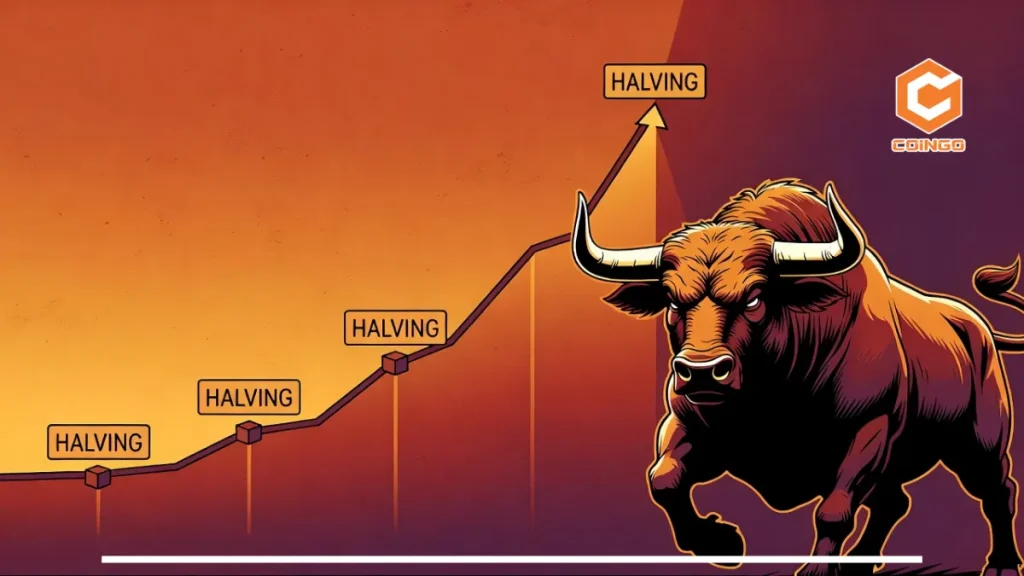
The data across all four halvings reveals a clear pattern of diminishing percentage returns. Each cycle has produced smaller gains from halving day to both the 12-month mark and the eventual cycle peak.
| Halving | Date | Block Reward | Price at Halving | Price After 12 Months | 12-Month Return |
|---|---|---|---|---|---|
| 1st | Nov 28, 2012 | 50 → 25 BTC | ~$12 | ~$1,075 | +8,858% |
| 2nd | Jul 9, 2016 | 25 → 12.5 BTC | ~$650 | ~$2,560 | +294% |
| 3rd | May 11, 2020 | 12.5 → 6.25 BTC | ~$8,500 | ~$55,847 | +540% |
| 4th | Apr 20, 2024 | 6.25 → 3.125 BTC | ~$63,800 | ~$83,700 | +31% |
Why Returns Are Shrinking With Each Cycle
The diminishing returns pattern is not random. It reflects three structural shifts happening simultaneously.
First, the marginal supply impact is shrinking. In 2012, the halving removed 7,200 BTC per day from the new supply. By 2024, the daily reduction was just 450 BTC. As the absolute volume of new coins declines, the supply shock becomes less dramatic relative to total circulating supply and daily trading volumes.
Second, market capitalization has grown enormously. Moving a $1.3 trillion asset requires vastly more capital than moving a $100 million one. Early cycle gains of thousands of percent were possible because Bitcoin’s market cap was tiny. At current valuations, even a 100% move means hundreds of billions of dollars in new capital entering the market.
Third, the market has become more efficient. With ETFs, regulated derivatives, and sophisticated institutional players, halvings are now priced in months or even years in advance. The 2024 cycle was the first where Bitcoin hit a new all-time high before the halving, suggesting the market had already front-run the supply event. This stands in stark contrast to 2012, when barely anyone was paying attention.
Macro Conditions Shaped Each Cycle Differently
Halvings do not operate in a vacuum. External conditions have played a growing role in determining post-halving performance.
The 2012 halving occurred during a period of relative economic calm. Bitcoin was too small for macro forces to matter. The 2016 halving coincided with rising interest in blockchain technology and the ICO boom that would follow. The 2020 halving benefited enormously from unprecedented monetary stimulus, with central banks flooding markets with liquidity.
The 2024 cycle faced the toughest macro headwinds. The Economic Policy Uncertainty Index averaged 317 during the six months after the halving, compared to 107 in 2012, 109 in 2016, and 186 in 2020. Trade tensions, geopolitical uncertainty, and cautious Federal Reserve policy all weighed on risk appetite. By early 2026, these macro pressures have intensified further, with Bitcoin dropping below $70,000 temporarily before recovering to the $75,000 range.
How Halvings Reshape Mining Economics
Each halving creates immediate financial pressure on miners, who see their primary revenue source cut by 50% overnight. Electricity represents 75-85% of monthly mining expenses, and the all-in cash cost for top listed miners sits at approximately $45,000 per Bitcoin post-2024 halving.
Despite the revenue hit, Bitcoin’s network hash rate reached 1 zetahash per second in 2025, a milestone that reflects continued investment in mining infrastructure. Mining difficulty hit 148.2 trillion in late 2025, up 35% year-over-year. However, hash price, the expected return per hash, has fallen roughly 60% since the April 2024 halving, squeezing margins for less efficient operators.
The pattern after each halving is consistent: less efficient miners exit, difficulty adjusts downward briefly, and the surviving miners benefit from reduced competition. Over time, rising Bitcoin prices have historically compensated for the reduced block rewards, but this cycle’s muted price performance has tested that assumption more than any previous one.
Is the Four-Year Cycle Breaking Down?
The 2024 cycle has sparked a serious debate about whether the traditional four-year halving cycle still holds predictive power.
On one side, analysts point to the October 2025 peak at roughly $126,000, which arrived about 18 months after the halving. This timing is consistent with the historical pattern where cycle peaks appear 12-18 months post-halving. In this view, the cycle is still working, just producing smaller percentage gains as the market matures.
The opposing view argues that ETF demand, corporate treasury buying, and growing institutional participation have fundamentally changed price formation. In this framework, Bitcoin is maturing into something closer to gold: still volatile, but with less pronounced halving-driven cycles. The supply reduction from each halving becomes less significant when daily ETF inflows can dwarf the entire daily issuance of new coins.
Some analysts now advocate for a two-year cycle model instead, arguing that global liquidity conditions, interest rate policy, and macro sentiment drive Bitcoin’s price more than the fixed halving schedule. The 2024 cycle’s weak post-halving performance is cited as evidence that the halving’s direct price impact is fading, even as it remains symbolically important.
Looking Ahead to the 2028 Halving
The next Bitcoin halving is projected for April 2028, when the block reward will drop from 3.125 BTC to 1.5625 BTC. By that point, over 98% of all Bitcoin will have been mined, and the daily issuance of new coins will be negligible relative to circulating supply.
If the diminishing returns pattern continues, the 2028 cycle would likely produce an even smaller percentage gain than the 2024 cycle. But absolute dollar returns could still be significant. A 30% move on a $75,000 base means roughly $22,500 per coin. Whether demand-side catalysts like sovereign adoption, expanded ETF products, and corporate treasury allocations can offset the fading supply-side impulse remains the central question.
The halving remains one of Bitcoin’s most important structural features. It enforces predictable scarcity in a world where fiat currencies have unpredictable and often expanding supply. But the data now clearly shows that each halving matters less to price in percentage terms, even as Bitcoin itself becomes more embedded in the global financial system. The question is no longer whether halvings move price. It is how much, and for how long.