Prediction Markets
Prediction markets moved from niche experiment to one of the most watched corners of crypto in a single cycle. The major venues now route hundreds of millions in volume on elections, geopolitics, court rulings, and macro events, and the regulatory question has shifted from “will these be allowed” to “who gets to run them and under what license.” The coverage here tracks the full landscape: volume and open interest across the major venues, regulatory battles with the CFTC and state gambling regulators, partnership deals bringing event contracts into mainstream brokerage and social media platforms, liquidity dynamics on contested events, the oracle and resolution disputes that occasionally turn into litigation, and the broader question of whether these venues actually price information better than traditional polling and forecasting.
The 2024 U.S. election was the inflection point. The leading crypto-native venue processed over $3.6 billion in election volume and called the result before mainstream media networks, which forced regulators, journalists, and political consultants to take the category seriously for the first time. The compliant alternative pursued a different path, securing CFTC-regulated event contract status and positioning as the U.S. domestic option. The two models now sit in different regulatory boxes, target different user bases, and compete for the same headline events.
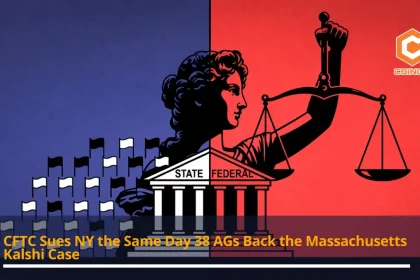
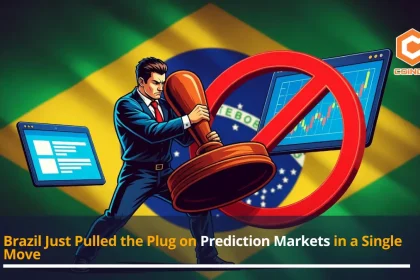
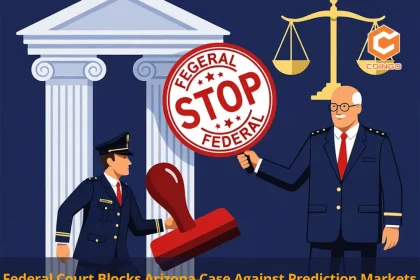
The legal landscape in 2026 is more contested than the volume numbers suggest. State attorneys general from Massachusetts, New York, New Jersey, and others have argued that event contracts are gambling under state law, regardless of CFTC approval. The CFTC sued New York on the same day 38 state AGs filed in support of a parallel Massachusetts case, drawing the federal-state preemption fight directly into the courts. Brazil banned prediction markets outright in a single regulatory move. Romania blocked 300 sites and launched a treatment fund framing the activity as gambling addiction. The line between regulated derivative and illegal gaming is being drawn jurisdiction by jurisdiction, and every drawing has consequences for which platforms can operate where.
The partnership wave has changed the distribution layer. Major U.S. exchanges and brokerages launched event contracts after years of saying they could not. Social media platforms began integrating cashtag-driven prediction products, with one launch pulling in $1 billion in volume within 48 hours. Traditional financial venues partnered with casino operators and stock exchanges to build U.S. compliant alternatives. The category is no longer the domain of crypto-native users alone — it has become a feature in mainstream brokerage and social media products, which is what makes the regulatory questions urgent.
Coingo covers the trades that moved markets, the wallets that made or lost serious money on a single event, the legal challenges from state attorneys general, the partnership deals reshaping distribution, and the structural debates about whether prediction markets are derivatives, gambling, or something new entirely. We track research on accuracy — including the recent finding that just 3% of traders drive most of the price discovery, not the crowd consensus the platforms market on stage. The line keeps shifting. We follow where it lands.