Three Lawsuits, One Defining Question
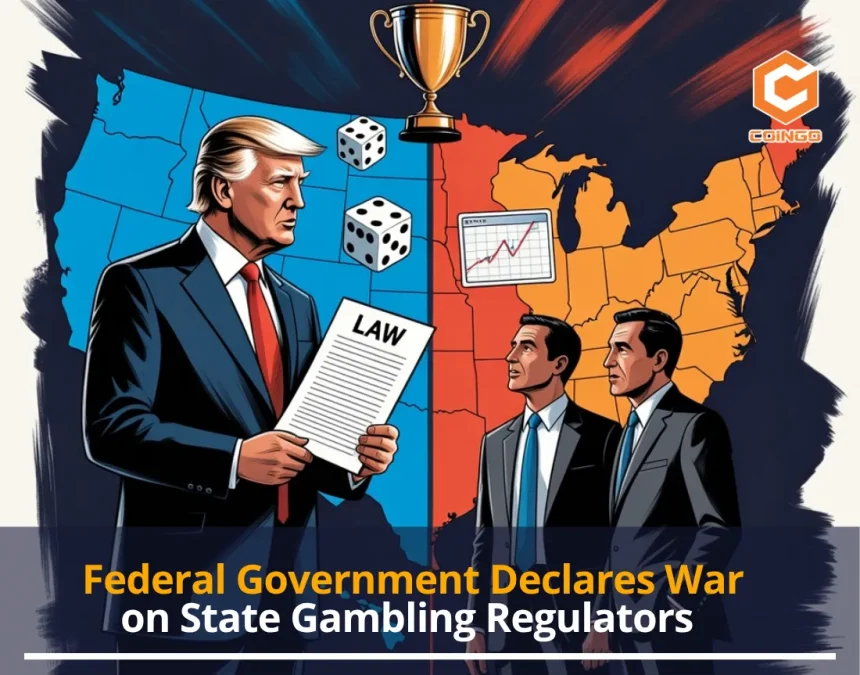
In a historic move on April 2, 2026, the U.S. Commodity Futures Trading Commission (CFTC) and the Department of Justice (DOJ) initiated legal action against the states of Arizona, Connecticut, and Illinois. This marks the first time the CFTC has directly sued states over jurisdictional authority regarding prediction markets. The litigation targets state gambling regulators who have spent the past year attempting to shutter federally licensed platforms and event contract operations.
The core of the federal claim rests on “preemption.” The CFTC argues that under the Commodity Exchange Act (CEA), it holds exclusive jurisdiction over swaps and event contracts traded on registered Designated Contract Markets (DCMs). The agency contends that state gambling laws cannot override this federal authority. At stake is a fundamental classification: are prediction markets offering sports-related event contracts regulated financial instruments or illegal gambling?
“The CFTC has clear and longstanding exclusive jurisdiction to regulate prediction markets,” stated Michael S. Selig, CFTC Chairman. “These states’ aggressive and overzealous attempts to overstep federal boundaries have led to market uncertainty and risk destabilizing effects for market participants.”

State Actions and the Path to Litigation
The conflict escalated in April 2025 when the Illinois Gaming Board issued cease-and-desist letters to several operators, alleging they were facilitating unlicensed sports wagering under state law. By January 2026, enforcement actions were expanded. Arizona took even more drastic measures in March 2026, becoming the first state to pursue criminal charges against a platform operator, citing concerns over users trading on state election outcomes.
| State | Action Taken | Targeted Entities | Legal Status |
|---|---|---|---|
| Illinois | Cease-and-desist letters (Apr 2025, Jan 2026) | Licensed event contract operators | Federal lawsuit filed Apr 2, 2026 |
| Arizona | Criminal charges filed (Mar 2026) | Prediction market operator | Federal lawsuit filed Apr 2, 2026 |
| Connecticut | Cease-and-desist letters (2025) | Federally registered markets | Federal lawsuit filed Apr 2, 2026 |
| Nevada | Civil lawsuit filed (Feb 2026) | Prediction market platform | State case ongoing; no federal lawsuit yet |
| 8+ Other States | Cease-and-desist letters | Various contract markets | At risk of future federal litigation |
Finance or Gambling: The Core Divide
State regulators argue that prediction market platforms gain an unfair competitive advantage over traditional sportsbooks, which are required to pay state gaming taxes and comply with local licensing. From the states’ perspective, a wager placed on a sporting outcome is a bet, regardless of how it is framed federally.
Conversely, the federal government and the platforms maintain that event contracts function as derivatives. They serve as tools for price discovery, risk hedging, and information aggregation—functions the CFTC has overseen for more than two decades. Federal complaints argue that state-level enforcement makes it impossible for registered markets to fulfill their mandate of providing “impartial access” to participants nationwide.
Political Undercurrents and Future Outlook
This legal posture by the administration does not exist in a vacuum. High-profile political figures and major media entities have shown increasing interest in the sector, with some even planning their own prediction market ventures.
Legal analysts suggest that the lawsuit against Illinois could trigger further federal action against at least eight other states that have issued similar warnings. A federal victory would effectively open prediction markets across all 50 states. Conversely, a win for the states would fragment the market and hand a significant advantage back to locally licensed sportsbooks. With these platforms now processing billions of dollars in volume, the outcome will set the standard for how the U.S. regulates the next generation of event-based financial products.