
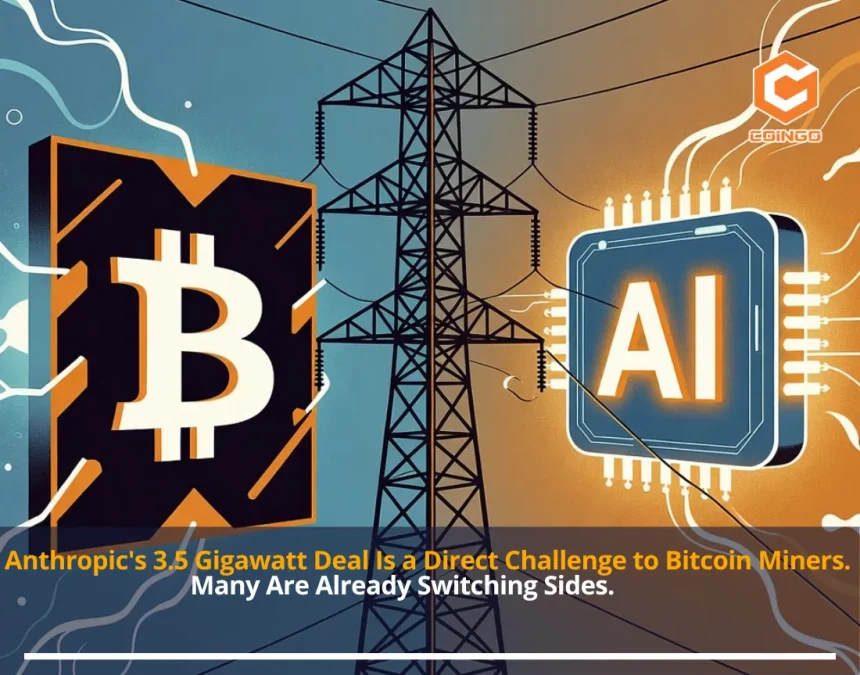
The Deal: What Anthropic Actually Secured
On April 6, 2026, Anthropic announced it had signed an agreement with Google and Broadcom for multiple gigawatts of next-generation TPU compute capacity, coming online starting in 2027. More specific figures, disclosed through Broadcom’s SEC filings and confirmed by Bloomberg and CNBC, put the figure at approximately 3.5 gigawatts of new capacity — in addition to the roughly 1 gigawatt of Google compute Anthropic is already receiving in 2026.
Broadcom separately announced an extended partnership with Google to design and supply future generations of custom TPU chips through 2031, confirming this is a structural, multi-year buildout rather than a one-time procurement. The majority of the new capacity will be U.S.-based. Anthropic CFO Krishna Rao described it as “our most significant compute commitment to date,” stating the company was building capacity to serve “exponential growth” in its customer base while enabling Claude to remain at the frontier of AI development.
Alongside the compute announcement, Anthropic disclosed that its annual revenue run rate had crossed $30 billion, more than tripling from approximately $9 billion at the end of 2025. The number of business customers spending more than $1 million annually on Claude doubled from 500 to over 1,000 in under two months — a pace of enterprise adoption that the infrastructure commitment is designed to support. Analyst estimates at Mizuho project the Anthropic-Broadcom partnership could generate approximately $21 billion in AI-related revenue for Broadcom in 2026, potentially doubling to $42 billion the following year.
Why This Is a Bitcoin Mining Problem
The Cambridge Bitcoin Electricity Consumption Index estimates that global Bitcoin mining draws approximately 13 to 25 gigawatts of continuous power worldwide, depending on hardware efficiency assumptions. Anthropic’s single deal — 3.5 gigawatts in new capacity plus 1 gigawatt already incoming — represents a meaningful fraction of that entire figure, from one company, in one transaction.
AI and Bitcoin mining compete for the same constrained physical resources: grid connections, land permits, cooling infrastructure, and cheap electricity. New grid interconnection queues in major U.S. markets now stretch years. PJM Interconnection, the largest grid operator in the United States, projects a 6 gigawatt shortfall by 2027 — the equivalent of six large nuclear power plants going offline simultaneously. U.S. data center electricity demand is projected to surge from under 15 GW today to 75.8 GW in 2026, 108 GW in 2028, and 134.4 GW by 2030.
Anthropic is one company. OpenAI, which raised $122 billion the same week and has described compute as a “strategic moat,” is building across an even wider infrastructure portfolio spanning five cloud providers and four chip platforms. The aggregate AI compute buildout now represents one of the largest sources of new electricity demand in the United States — and it is arriving at the exact moment Bitcoin miners are trying to secure or retain the same grid access.
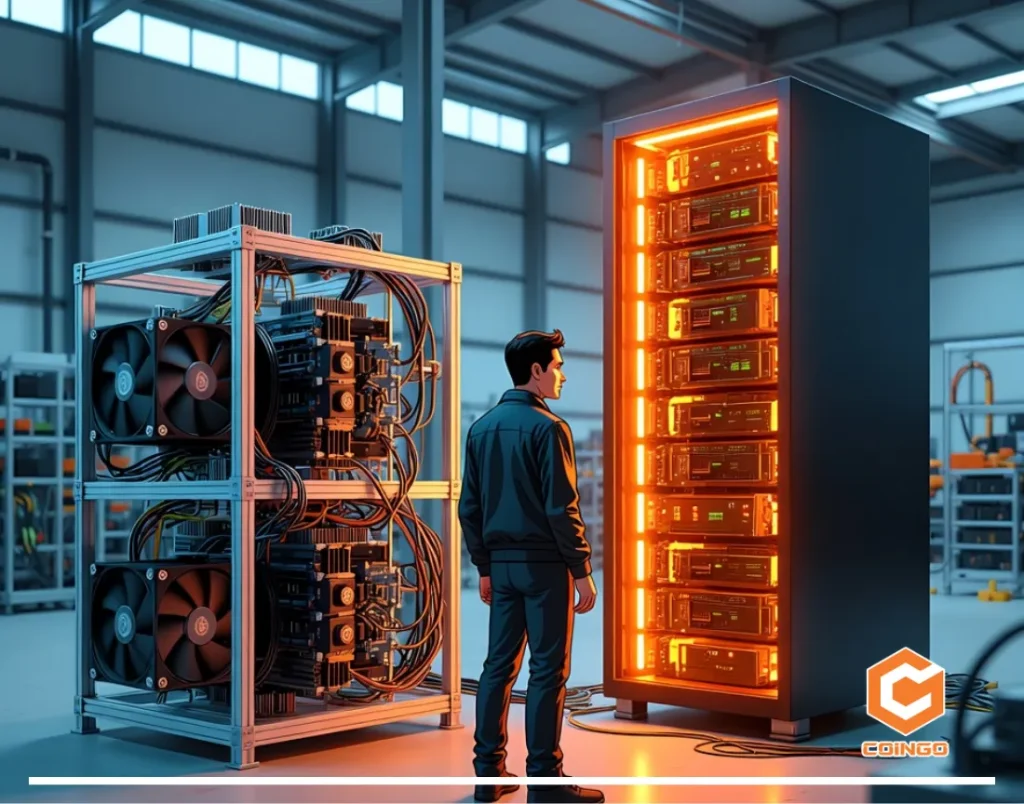
Table 1 — Bitcoin Mining vs. AI Hosting: The Economic Comparison (April 2026)
| Metric | Bitcoin Mining (1 GW) | AI Hosting (1 GW) |
|---|---|---|
| Revenue structure | Variable — tied to BTC price and difficulty | Fixed contracted rate, predictable cash flows |
| Current profitability | ~$19,000 loss per BTC produced | 80–90% operating margins |
| Average cash cost per BTC | ~$79,995 (CoinShares Q1 2026) | N/A — dollar-denominated fixed contracts |
| Contract duration | No contract — daily revenue | 10–15 year enterprise agreements |
| Capital cost per MW | $700K–$1M per MW | $8M–$15M per MW (GPU/TPU-ready) |
| Market valuation multiple | ~5.9x NTM sales (pure-play miners) | ~12.3x NTM sales (miners with HPC contracts) |
| Counterparty | Bitcoin network (decentralized) | Anthropic, Google, CoreWeave, Microsoft |
Bitcoin Miners Are Becoming AI Companies and Selling BTC to Fund the Shift
The Pivot: Miners Are Already Moving
The competitive pressure is not theoretical. By early April 2026, over $70 billion in cumulative AI and high-performance computing contracts had been signed across the publicly listed Bitcoin mining sector, according to CoinShares’ Q1 2026 mining report. Some analysts project that select miners could derive up to 70% of their revenue from AI by end of 2026, effectively completing the transition from energy-to-Bitcoin to energy-to-AI.
Core Scientific is the most advanced example. The company — one of the largest publicly listed miners — is liquidating substantially all of its Bitcoin holdings in 2026 to fund a 1.2 gigawatt pivot to AI hosting. It held 2,537 Bitcoin at year-end 2025 and sold approximately 1,900 BTC for $175 million in January alone. Its deal with CoreWeave alone is worth $10.2 billion over 12 years. CEO Adam Sullivan has called the AI conversion “one of the largest infrastructure shifts of this decade.”
Hut 8 signed a $7 billion, 15-year lease for AI infrastructure at its River Bend campus, backstopped by Google, with Fluidstack as operator and Anthropic as a key AI tenant. The first data hall is expected in Q2 2027. The deal’s structure — long duration, blue-chip counterparties, Google as financial backstop — has been described as resembling an infrastructure REIT rather than a mining company.
TeraWulf is sitting on $12.8 billion in contracted HPC revenue. MARA Holdings sold 15,133 BTC worth $1.1 billion in March 2026 alone to retire debt and fund AI infrastructure buildout. Riot Platforms, which operates the 700 MW Rockdale site — one of the largest pre-energized sites in the U.S. — has directed substantial capacity toward AI and HPC workloads.
The Infrastructure Asset That Both Industries Need
The pivot works because miners spent years building exactly what AI companies now need most. A Bitcoin mining facility at scale requires: direct substation access and 100+ MW grid connections, industrial cooling systems capable of handling dense heat loads, substantial land in lower-cost power markets, and operational expertise in running high-draw computing equipment continuously. These are the same requirements for AI data centers — with one important addition: AI workloads increasingly require liquid cooling, which the latest NVIDIA Blackwell architecture makes mandatory for frontier training runs.
This infrastructure overlap is why hyperscalers are actively seeking pre-energized mining sites rather than building from scratch. New grid interconnection applications in major U.S. markets face queues of three to seven years. A mining facility with an existing 200 MW grid connection is worth significantly more to an AI company than a greenfield site — it eliminates years of permitting and utility negotiation. The market has priced this: miners with signed HPC contracts now trade at 12.3x next-twelve-month sales, more than double the 5.9x multiple for pure-play miners.
The capital cost differential is also significant. Building AI-ready data center infrastructure costs $8 million to $15 million per megawatt — driven by liquid cooling requirements, transformer shortages, and high-density GPU rack specifications. Bitcoin mining infrastructure costs $700,000 to $1 million per megawatt. The conversion is capital-intensive, which is why miners are selling Bitcoin reserves to fund it. But the return profile is categorically different: a 15-year take-or-pay contract with a Google-backstopped counterparty is not comparable to daily block reward revenue at current Bitcoin prices.
What This Means for Bitcoin’s Network
The exodus of mining infrastructure toward AI hosting has measurable consequences for the Bitcoin network. Bitcoin’s hashrate peaked at approximately 1,160 exahashes per second in October 2025. By February 2026 it had declined to approximately 850 EH/s — a 27% drop — before partially recovering to around 1,020 EH/s as difficulty adjustments made remaining miners more competitive. On March 21, 2026, mining difficulty dropped 7.76% — the second-largest downward adjustment of the year.
The Bitcoin network’s difficulty adjustment mechanism is designed to handle this. When miners leave, difficulty decreases automatically every 2,016 blocks (roughly two weeks), making it more economical for remaining miners to produce blocks and keeping the 10-minute block interval intact. The security margin narrows, but the economic incentive for remaining miners improves as competition thins. CoinShares forecasts hashrate recovery to 1.8 zetahashes per second by end of 2026 if Bitcoin reaches $100,000 — but continued prices in the $65,000 to $70,000 range would keep the exodus pressure elevated.
The longer-term structural question is about fee revenue. As block subsidies halve every four years, the Bitcoin network’s security budget increasingly depends on transaction fees. If a large portion of mining capacity permanently migrates toward AI hosting, and fee revenue does not scale to compensate for the lost subsidy, the equilibrium point for mining economics shifts. This is not an imminent crisis — the difficulty adjustment handles short-term fluctuations — but it is the scenario that will define Bitcoin’s security model over the next decade.
The Industry’s Irreversible Reorientation
The Anthropic deal is the latest and largest data point in a trend that has been building for 18 months. What began as opportunistic diversification by a handful of mining companies has become the dominant strategic direction for the publicly listed mining sector. The companies that are surviving the current margin environment are not doing so by mining more Bitcoin. They are doing so by selling access to their real asset — cheap power at scale with pre-energized infrastructure — to the AI industry.
“The bitcoin mining industry entered this cycle as a group of companies that secured the network and accumulated bitcoin. It is exiting as a group of companies that build AI data centers and sell bitcoin to fund them.” — CoinDesk, March 2026
Whether this constitutes a permanent structural shift or a cyclical response to compressed mining margins depends almost entirely on Bitcoin’s price trajectory. CoinShares projects that if Bitcoin recovers above $100,000, mining margins improve, the AI pivot slows, and dual-revenue models become viable. If Bitcoin stays in the $65,000 to $70,000 range, the conversion accelerates and more of the physical infrastructure that once secured the Bitcoin network gets redirected toward training the next generation of AI models.
The companies deciding that question right now are the same companies that Anthropic, Google, and CoreWeave are signing 15-year contracts with. The power grid is the common asset. Who owns the revenue stream from that asset — the Bitcoin network or the AI economy — is the central bet of the decade in infrastructure investing.